
TL;DR
- A headstone QR code is a small, weather-resistant plaque attached to a grave marker that links visitors to a full digital memorial page when scanned with any smartphone.
- No special app is needed — modern iPhones and Android devices scan QR codes natively through the camera, connecting visitors to photos, videos, stories, and tributes in seconds.
- Plaque materials range from stainless steel (25+ years) to ceramic (20–25 years) to laser-etched granite that lasts as long as the stone itself.
- Cemetery regulations vary — always check with your cemetery administration before purchasing and installing a QR code plaque.
- Over 63% of Americans now choose cremation, driving families toward digital memorial solutions that preserve stories traditional headstones simply cannot hold.
The Headstone QR Code Revolution: Why Families Are Going Digital
A traditional headstone holds a name, two dates, and maybe a brief epitaph — roughly 50 words to summarize an entire life. A headstone QR code changes that equation completely. By placing a small, scannable plaque on a grave marker, families can connect visitors to a rich digital memorial containing thousands of photos, hours of video, biographical narratives, and heartfelt tributes from dozens of loved ones.
This isn’t a futuristic concept — it’s happening right now in cemeteries across America. In early 2026, the American Legion Post 108 launched a historian project at Lutz Cemetery in Florida, where QR codes attached to headstones link visitors to online biographies written by local Cub Scouts. It’s one of hundreds of similar initiatives emerging as families discover the power of bridging physical memorials with digital storytelling.
of Americans chose cremation in 2025, driving demand for alternative memorial solutions like headstone QR codes (NFDA 2025 Report)
With cremation rates projected to reach 82% by 2045 according to the Cremation Association of North America, and the death care services market valued at over $143 billion globally, the shift toward digital memorialization isn’t slowing down. Digital memorial services have grown 35% in recent years, and headstone QR codes sit at the intersection of tradition and technology — preserving the sacred physical marker while unlocking limitless digital remembrance.
What Is a Headstone QR Code?
A headstone QR code is a two-dimensional barcode — typically displayed on a durable plaque, medallion, or tile — that is physically attached to a headstone, grave marker, urn, memorial bench, or other tribute. The QR code stores a URL that, when scanned by a smartphone camera, instantly opens a dedicated digital memorial page for the person buried or memorialized there.
Think of it as a bridge between the physical world and a living digital tribute. The QR code for headstone applications works exactly like scanning a QR code at a restaurant or museum — except instead of pulling up a menu or exhibit information, visitors are connected to a deeply personal page celebrating someone’s life.
Key distinction: A headstone QR code is not a replacement for the traditional monument — it’s an enhancement. The physical headstone remains the anchor of remembrance, while the QR code unlocks everything the stone itself cannot hold.
How a Headstone QR Code Works: Step by Step
Understanding how a QR code on headstone technology works is simpler than most families expect. Here’s exactly what happens from installation to the moment a visitor scans the code at the gravesite.
Step 1: A QR Code Plaque Is Attached to the Memorial
The process begins with a physical QR code plaque — a small, weather-resistant marker typically made from stainless steel, ceramic, or granite. This plaque contains a unique QR code that has been laser-etched or permanently printed onto its surface. The plaque is then securely attached to the headstone, grave marker, urn, bench, or memorial tree using industrial-grade adhesive or mechanical fasteners designed to withstand decades of outdoor conditions.
Most QR code plaques are compact — typically between 2 and 4 inches in diameter — designed to complement rather than overpower the existing monument. The installation can often be completed in minutes, though many cemeteries recommend or require professional placement.
Step 2: The Code Links to a Digital Memorial Page
Behind every headstone QR code is a digital memorial page hosted on a platform like Linkora. When the QR code is created, it is linked to a unique URL for that specific memorial. The digital page can include:
- Photos and albums — thousands of images organized by life milestones, events, or contributors
- Videos — home movies, interview recordings, celebration-of-life footage
- Biography and life story — a detailed narrative far beyond what any headstone inscription could hold
- Tributes and guest book — messages from family, friends, and community members who want to share memories
- Family tree — interactive genealogy with GEDCOM import support connecting generations
- Timeline — key life events, achievements, and milestones mapped chronologically
Platforms like Linkora give families complete control over what appears on the memorial page, including privacy settings that determine who can view and contribute content.
Step 3: Visitors Scan and Connect
When someone visits the gravesite, they simply point their smartphone camera at the QR code on headstone — no special app required. Both iPhone (iOS 11+) and Android devices natively recognize QR codes through their built-in camera apps. A notification or link appears on screen, and with a single tap, the visitor is transported from the quiet of the cemetery to a vibrant, multimedia celebration of life.
The entire scanning process takes less than three seconds. Visitors can browse at their own pace — viewing photos, watching videos, reading stories, or adding their own tributes to the memorial page.
No app required: Unlike many technology solutions, headstone QR codes work with any modern smartphone. Visitors simply point their camera and tap — making the experience accessible to everyone from tech-savvy grandchildren to great-grandparents.
What Can You Include on a QR Code Memorial Page?
One of the most powerful aspects of memorial QR codes is the virtually unlimited content a digital page can hold. While a traditional headstone might accommodate a name, dates, and a brief inscription, a QR code for headstones links to a living digital tribute that grows and evolves over time.
Families using platforms like Linkora typically include photographs spanning decades of a loved one’s life, video clips from family gatherings and celebrations, a written biography capturing personality and stories, a digital guest book where visitors can leave messages and share their own memories, and an interactive family tree that connects multiple generations. Some families even import GEDCOM genealogy files to create comprehensive family histories that become part of the memorial experience.
The key difference from a static online obituary is that these pages are living documents — family members can continue adding content, updating stories, and preserving new memories for years or even decades after the initial memorial is created. It’s a way to ensure that a loved one’s story keeps growing, even after they’re gone.
Choosing the Right QR Code Plaque: Materials and Durability
The longevity of a QR code plaque depends primarily on the material it’s made from. Since these plaques are exposed to sun, rain, snow, and temperature extremes year-round, choosing the right material matters significantly. Here’s how the most common options compare:
| Material | Expected Lifespan | Weather Resistance | Best For |
|---|---|---|---|
| Grade 316L Stainless Steel | 25+ years | Excellent — resists salt spray, UV, freeze-thaw | All climates, most versatile choice |
| Ceramic Tile | 20–25 years | Moderate — avoid extreme cold climates | Mild climates, colorful/decorative options |
| Laser-Etched Granite | Lifetime of the stone | Excellent — withstands any conditions | Maximum permanence and longevity |
| Anodized Aluminum | 10–15 years | Good — lightweight but less durable | Budget-friendly, lighter monuments |
| Weatherproof Adhesive Labels | 3–7 years | Low — temporary solution only | Short-term or testing purposes |
Popular brands illustrate the range of options available. The Turning Hearts QR code medallion uses anodized aluminum and has gained viral attention on social media, while Life’s QR code plaques use stainless steel with a comprehensive memorial platform. For most families, Marine-Grade 316L stainless steel offers the best balance of longevity, scan reliability, and affordability. The molybdenum content in 316L steel provides enhanced corrosion resistance that’s especially important in coastal, humid, or harsh-winter climates. Laser-engraved QR codes on quality stainless steel maintain 99%+ scanning reliability even after years of outdoor exposure.
When choosing a plaque, look for high error correction levels (Level H) in the QR code itself — this means the code can still be scanned even if up to 30% of the surface is damaged or obscured by dirt or weathering.
How to Set Up a Headstone QR Code for Your Loved One
Setting up a QR code for headstone memorial is a straightforward process that most families can complete in under 30 minutes. Here’s a practical guide to getting started:
1. Create the digital memorial page. Start by setting up the online memorial on a trusted platform like Linkora. Upload photos, write the biography, add videos, and invite family members to contribute their own memories and tributes. Linkora’s privacy-first approach gives you complete control over who can view and edit the memorial content.
2. Choose your QR code plaque material. Select a plaque material based on your climate and monument type. Stainless steel works well in virtually any environment, while laser-etched granite is ideal for families wanting maximum permanence.
3. Check cemetery regulations. Before purchasing, contact your cemetery administration to confirm their policies on headstone attachments. Most modern cemeteries welcome QR code plaques, but some older or more traditional locations may have restrictions.
4. Install the plaque. Once approved, attach the QR code plaque to the headstone using the recommended method — typically industrial-grade adhesive or mechanical fasteners. Position the code at a height and angle that’s easy to scan without requiring visitors to kneel or disturb the gravesite.
5. Test and verify. After installation, scan the code with your smartphone to confirm it links correctly to the memorial page. Test in different lighting conditions and from various angles to ensure consistent readability.
Cemetery Regulations: What to Check Before Installation
Before installing a QR code on headstone or grave marker, it’s essential to understand and comply with your cemetery’s specific regulations. Policies vary significantly between cemeteries, and failing to check in advance could result in the plaque being removed.
Important: Many cemeteries require professional installation of memorial QR code plaques. Contact your cemetery office before purchasing to understand their attachment policies, size restrictions, and any approval processes.
Key questions to ask your cemetery administration include whether attachments to existing headstones are permitted, whether there are size or material restrictions for additional plaques, whether professional installation is required or recommended, and whether the cemetery has specific aesthetic guidelines that QR plaques must follow.
The good news is that many modern cemeteries are actively welcoming QR code technology. Some, like Lutz Cemetery in Florida — where graves now feature stainless steel codes linked to biographies hosted by Life’s QR — have even initiated their own programs to add QR codes to existing graves. Cemetery administrators increasingly recognize that memorial QR codes enhance the visitor experience without altering the traditional dignity of the grounds.

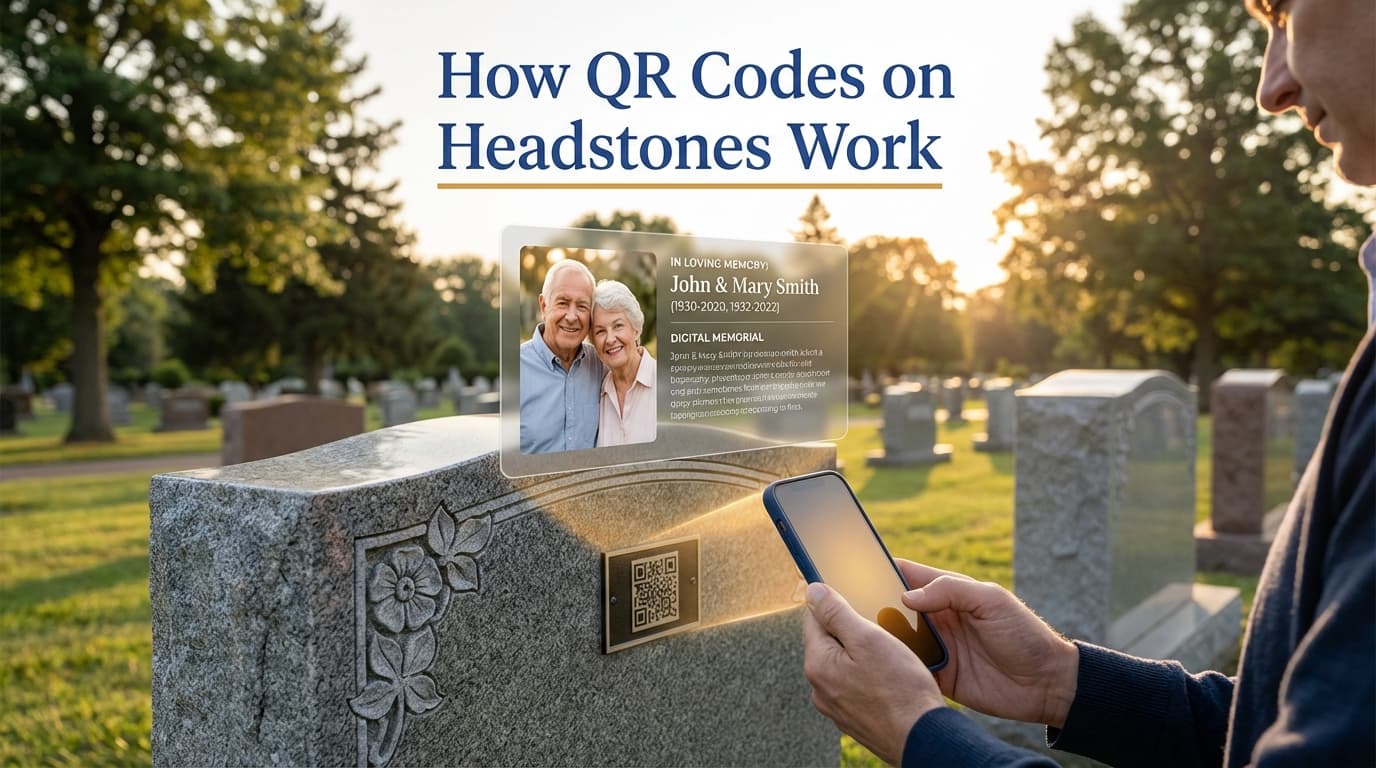
How headstone QR codes connect physical memorials to digital tributes — from installation to the scanning experience.
Why Families Are Choosing Headstone QR Codes
The growing adoption of headstone QR code technology reflects a fundamental shift in how families approach memorialization. Several factors are driving this trend:
Unlimited storytelling capacity. A headstone holds roughly 50 words. A digital memorial page can hold thousands of photos, hours of video, and detailed biographical narratives that capture the full depth of a person’s life — their humor, their passions, their relationships, and their legacy.
Multigenerational connection. QR code memorials allow great-grandchildren to discover and connect with ancestors they never met. Family members across the globe can contribute memories, creating a collaborative tribute that grows richer over time. Linkora’s GEDCOM family tree import feature bridges physical graves with comprehensive digital family histories.
Privacy and control. Quality platforms offer robust privacy settings that let families control exactly who can view the memorial, who can contribute content, and what appears on the page. With Linkora, families maintain complete control over their loved one’s digital tribute — a privacy-first approach trusted by over 500 families.
No app required. One of the most practical advantages of headstone QR codes is their universal accessibility. Any visitor with a modern smartphone can scan the code using their built-in camera — no downloads, no accounts, no technical barriers. This makes the experience accessible to everyone from young children to elderly relatives.
Future-proof technology. Dynamic QR codes allow the destination URL to be updated even after the plaque is installed. If a hosting platform changes or content moves to a new location, the physical code doesn’t need to be replaced — the link simply redirects to the updated page.
Families trust Linkora to preserve their loved ones’ stories, with 12,000+ photos preserved and 98% caretaker satisfaction