
The short version
- Bronze memorial plaques are cast metal markers prized for their warmth, weight, and dignity. Most run roughly $325 to $3,000, with small niche markers starting near $200 and large photo-relief pieces climbing past $6,000.
- Price is driven by size, thickness, lettering, emblems, portraits, and mounting, not a flat per-letter rate.
- Bronze resists cracking and lasts well over 50 years, often a century with care. It develops a greenish patina over time that many families come to love.
- Granite wins on low-maintenance permanence; bronze wins on warmth and the ability to cast fine detail and raised lettering.
- A small QR memorial plaque can be added to any bronze marker, linking the physical stone to photos, videos, and a full life story online.
Why families still choose bronze
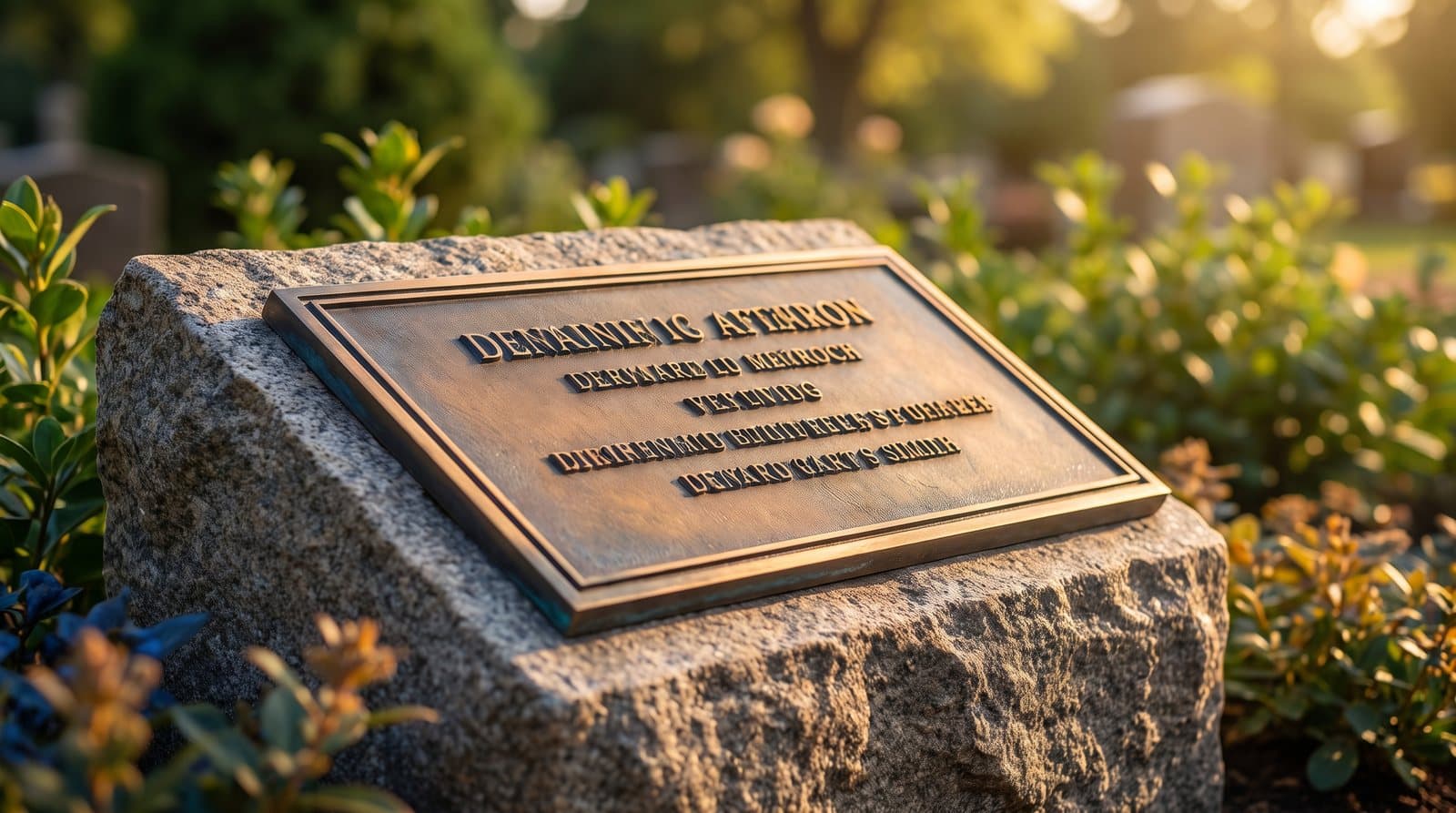
A headstone holds a name, two dates, and if there is room, a few words like “Beloved Mother.” A bronze plaque holds the same things, but it does it with a warmth that stone cannot quite match. Cast metal catches afternoon light, carries raised lettering you can run your fingers across, and ages into a soft patina that feels less like wear and more like the passage of time itself. That is why bronze has marked graves, garden benches, civic buildings, and memorial walls for well over a century.
If you are arranging a marker for a parent or grandparent, the questions tend to arrive all at once. What does bronze actually cost? How long does it last? How is it different from granite? And increasingly, can it do more than display a name? This guide answers each of those, and shows where a quiet piece of modern technology now fits alongside a very old craft.
A bronze plaque and a digital memorial are not competing choices. Many families pair them: the cast marker honors the grave, and a scannable code opens the fuller story. If you are weighing the broader options first, our guide to headstone ideas and designs is a good place to start.
What a bronze memorial plaque actually is
Most quality memorial plaques are cast bronze, meaning molten metal is poured into a mold made from your design rather than engraved into a flat sheet. Casting is what gives bronze its signature raised lettering, sculpted borders, emblems, and even portraits in relief. The result is structurally solid, weather resistant, and built to sit outdoors for generations.
You will usually choose among a few finishes. Brushed satin gives a soft, even sheen. Polished bronze is brighter and more reflective. Oxidized finishes deepen the background so raised letters stand out. Whatever the finish, reputable foundries seal the surface with a protective clear coat to slow tarnishing. Bronze is the classic outdoor choice; brass, with its warmer golden tone, tends to live indoors in sanctuaries and lobbies, while granite and marble cover the heavier stone end of the spectrum.
Common types and where they go
Bronze shows up in several memorial forms. Flat grave markers and lawn-level plaques are the most common cemetery use, often set into a granite or concrete base. Niche plaques cover the front of a columbarium space holding cremated remains. Memorial benches, tree dedications, and garden markers use smaller bronze plates. And dedication plaques mark buildings, parks, and civic spaces. If a bench is what you have in mind, our memorial bench guide covers sizing, inscriptions, and how a small plaque fits the seat back or armrest.
How much do bronze memorial plaques cost?
There is no single sticker price, because a plaque is built to order. That said, the market clusters into recognizable ranges. Small bronze markers and niche plaques can start around $200 to $400. A typical cemetery marker with a standard inscription lands somewhere between roughly $600 and $2,500. Once you add a portrait, custom emblems, or a large format, the figure commonly runs $1,000 to $3,000, and elaborate photo-relief pieces can exceed $6,000.
| Plaque type | Typical price range | Notes |
|---|---|---|
| Small niche or marker (no photo) | $200 – $500 | Name, dates, short line |
| Standard grave marker | $600 – $2,500 | Common cemetery size, inscription and basic emblem |
| Custom with portrait | $750 – $3,000 | Color photo or relief portrait adds cost |
| Large photo-relief / sculpted | $3,000 – $6,000+ | Complex design, bigger format |
Most foundries price the whole piece rather than charging by the letter. The real cost drivers are size and thickness (more bronze means more money), design complexity, emblems and portraits, and mounting hardware. Many makers fold layout, standard lettering, and cemetery compliance checks into the quoted price, and a typical order arrives in six to eight weeks. Always confirm what your cemetery requires before ordering, since many sections specify allowed sizes and mounting styles.
Bronze vs granite: which lasts longer?
This is the comparison most families end up making, and the honest answer is that both can outlast everyone reading this page. They simply age in different ways.
| Bronze | Granite | |
|---|---|---|
| Lifespan | 50+ years, often a century with care | 100+ years |
| Main strength | Resists cracking and impact; fine detail | Resists erosion and freeze-thaw |
| Aging | Develops greenish patina from oxidation | Polish softens slowly; lettering may lose contrast |
| Maintenance | Gentle wash; occasional wax to slow tarnish | Yearly rinse with mild soap |
| Best for | Warmth, raised lettering, portraits | Low-maintenance outdoor permanence |
Granite usually wins for hands-off durability. Bronze wins when you want warmth, sculpted detail, and a marker that visibly carries the years. Many cemeteries pair the two, setting a bronze plaque into a granite base so you get the strengths of both. If you are still deciding between formats and finishes, our complete guide to headstone inscriptions walks through wording and layout that translate well to cast bronze.

Bronze memorial plaques at a glance: types, costs, durability, and the modern QR option.
What to put on a bronze memorial plaque
Because bronze is cast, every word adds a little to the mold and the budget, which is a useful constraint. Most engravers recommend keeping the inscription under about thirty words, and the most enduring ones are far shorter. A simple way to plan it is to think in three layers: identity, relationship, and meaning.
- Identity is the name and usually the birth and passing dates.
- Relationship says who they were to you or the community, such as “Beloved Father and Teacher.”
- Meaning is one line that holds the heart of it, like “Forever in our hearts” or a short line from a favorite verse.
Many plaques open with “In memory of” or “Remembering” and close with a line of love or faith. Write down three words that describe the person, build a short phrase from them, read it aloud, and ask another family member whether it rings true. Line breaks often do more work than commas, since a cast plaque reads best like a title page.
A cemetery marker has room for roughly 8 to 12 words. A digital memorial has room for a lifetime: hundreds of photos, video tributes, a written biography, and memories from everyone who loved them. The plaque names the person. The page tells their story.
Adding a QR code: where old craft meets new memory
This is the part that has changed the most in the last few years. A small, weatherproof QR memorial plaque can be attached to almost any bronze marker, granite base, bench, or niche. When a visitor opens their phone camera and scans it, no app required, the code opens an online memorial filled with everything a few cast words never could.
These tags are typically made from marine-grade stainless steel or aluminum and mount with industrial adhesive that bonds cleanly to bronze, granite, or marble without permanent marks. The effect is quietly powerful: a grandchild can stand at a grave, scan the code, and watch a video of the person whose name is cast in the metal in front of them. If you want to see how the technology works in practice, our overview of how QR codes on headstones work breaks down the mechanics, and the complete guide to QR code memorials covers the bigger picture.
Linkora was built for exactly this moment. A bronze plaque honors the grave with permanence and craft, and a Linkora memorial page carries the photos, videos, GEDCOM family tree, and tributes that keep a story alive for the next generation. Families keep full control over what is shared and who can see it, and visitors never need to download anything. Cemeteries and monument dealers exploring this can read how cemeteries are embracing QR technology today.
A practical roadmap for ordering
If you are ready to move forward, here is a sensible order of operations that keeps surprises to a minimum.
- Confirm cemetery rules first. Ask the office for allowed sizes, thickness, and mounting style before you design anything. This single step prevents most reorders.
- Set a budget range. Decide whether you want a simple marker, a portrait, or a larger sculpted piece, and match it to the cost bands above.
- Draft the wording. Keep it under thirty words, use the identity, relationship, meaning structure, and read it aloud.
- Choose finish and emblems. Pick brushed, polished, or oxidized, and any faith or service emblems. Request a proof before casting.
- Plan the digital layer. Decide whether to add a QR plaque now or leave room for one. Building the digital memorial page early means the code is ready the day the marker is set.
- Allow six to eight weeks. Casting takes time, so order well ahead of any unveiling or anniversary.
Trusted by more than 500 families, with 12,000+ photos preserved and a 98% caretaker satisfaction rate, Linkora helps families bridge the physical marker and the digital story. For pricing tailored to your situation, just reach out and we will walk you through the options.
Frequently asked questions
How much does a bronze memorial plaque cost?
Most bronze plaques cost between about $600 and $2,500 for a standard cemetery marker. Small niche markers can start near $200 to $400, while custom pieces with portraits typically run $1,000 to $3,000 and large photo-relief plaques can exceed $6,000. Price depends on size, thickness, lettering, emblems, and mounting.
How long do bronze plaques last?
Bronze markers are built to last more than 50 years, and with regular gentle cleaning and an occasional protective wax they often last well over a century. They resist cracking and impact, though they develop a natural greenish patina over time that many families choose to keep.
Is bronze or granite better for a grave marker?
Granite is the lower-maintenance option for long outdoor permanence, while bronze offers warmth, raised lettering, and fine cast detail. Both can last a century. Many cemeteries set a bronze plaque into a granite base to combine the strengths of each.
Can you add a QR code to a bronze plaque?
Yes. A small weatherproof QR plaque can be attached to bronze, granite, or marble with industrial adhesive that leaves no permanent marks. Scanning it with any phone camera opens a digital memorial page with photos, videos, and life stories, no app required.
How long does it take to make a bronze memorial plaque?
Because each plaque is cast to order, most arrive within six to eight weeks. Complex designs with portraits or sculpted relief can take longer, so order well ahead of any unveiling, dedication, or anniversary date.
Are you a monument dealer, funeral home, or cemetery looking to offer digital memorials alongside bronze and granite markers? Become a Linkora partner and add a modern remembrance product your families will thank you for.