
TL;DR — The 60-Second Read
- Cremation rings (also called ash rings or memorial rings) keep a tiny portion of a loved one’s ashes in a ring you can wear every day — with prices ranging from about $120 for a glass-infused band to $5,000+ for a solid-gold ash-infused ring.
- There are four main types: fillable chamber rings, resin-inlay rings, glass-bead rings, and memorial diamonds — each made differently, priced differently, and meant for different keepsake styles.
- Most quality handmade ash-infused rings sit in the $200–$400 sweet spot. Memorial diamonds start around $1,000–$1,500 and 1-carat colorless cremation diamonds typically run $12,000–$15,000.
- Only a pinch of ashes (about ¼ teaspoon) is needed. You keep the rest for an urn, scattering, or burial.
- A ring carries a fragment of who they were. A Linkora QR memorial carries the rest of the story — photos, voice notes, family tree, milestones — preserved for generations.
Why families are turning to cremation rings in 2026
When someone you love is cremated, the question of what to do with their ashes can feel impossibly large. Some families want one permanent resting place. Others want pieces — a portion at sea, a portion at home, a portion that travels with them quietly through everyday life. A cremation ring is one of the most personal answers to that last instinct. It is a ring designed to hold a small amount of cremated remains, made so the person you lost is, in some small way, still with you when you reach for the door, sign your name, or hold your child’s hand.
Memorial jewelry is one of the fastest-growing categories in the modern death-care economy. The global death care services market reached $143.32 billion in 2025 and is projected to keep growing at a 4.2% annual rate through 2035, and memorial jewelry — including ash rings, resin-inlay bands, and laboratory-grown memorial diamonds — is one of the categories driving that growth. Families want personalized, portable, lasting keepsakes, and they want them to feel like jewelry first and memorials second. This guide walks you through how cremation rings are made, what they cost, and how to choose one that genuinely reflects the person you’re honoring — whether you also choose a traditional urn for the rest of the ashes or pair the ring with a digital memorial page that preserves the larger story.
What is a cremation ring, exactly?
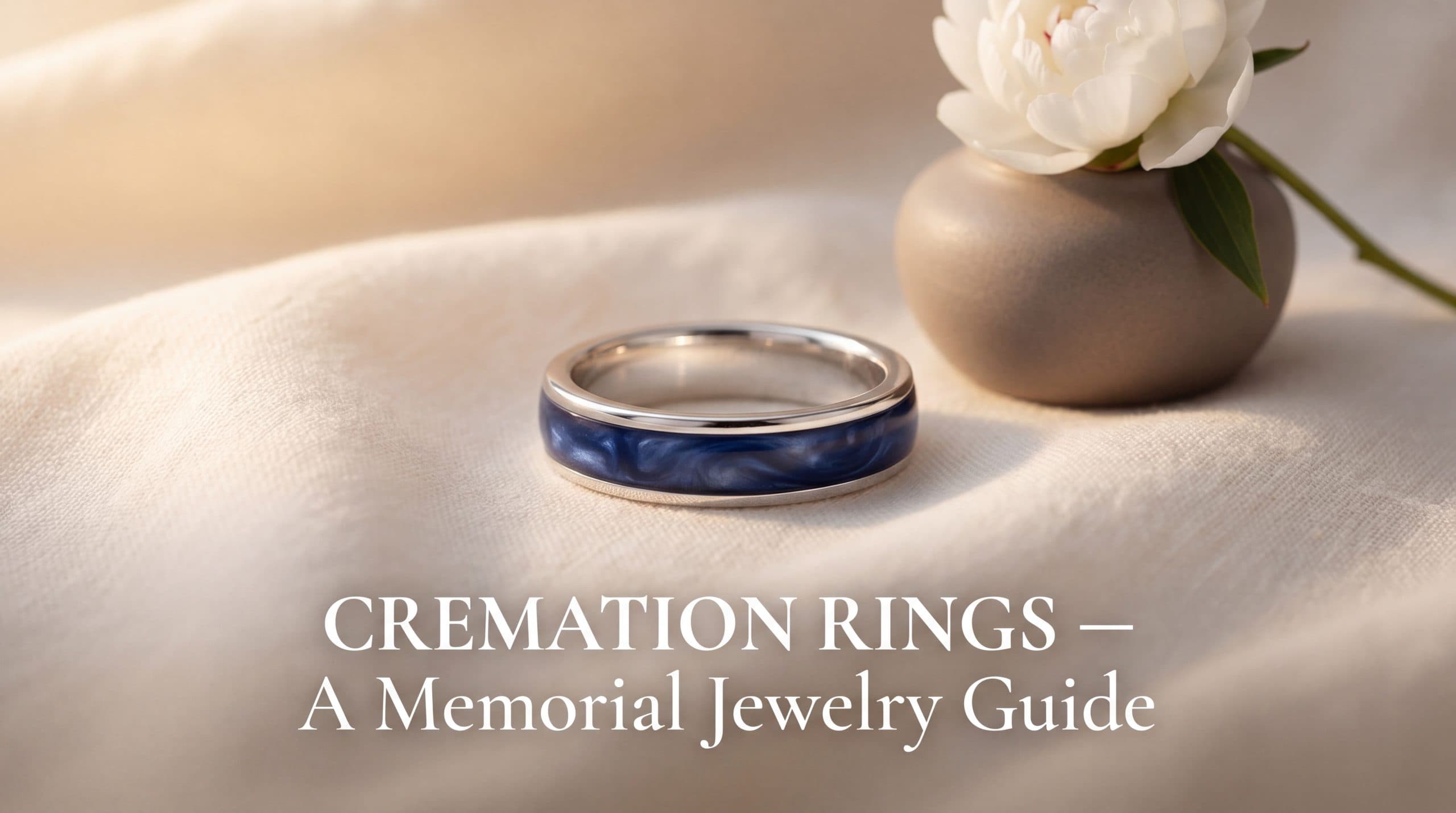
A cremation ring is a piece of memorial jewelry that incorporates a small portion of a loved one’s cremated remains (cremains), hair, fingerprint, or another physical keepsake into the ring itself. The remains can be sealed inside a hidden chamber, embedded into a resin or glass inlay, fused into a fired glass bead, or even transformed into a laboratory-grown diamond set into the band. Visually, most cremation rings look like ordinary fine jewelry — the memorial element is intentionally discreet so the wearer can decide who knows and who doesn’t.
Cremation rings are a form of what funeral professionals call “cremation jewelry” or “memorial jewelry.” They sit alongside cremation pendants, lockets, charm bracelets, and earring sets. Rings are particularly popular because they’re worn on the hand — the part of the body most often visible to the wearer themselves — which makes them feel less like an object of grief and more like a quiet, ongoing companion.
How much ash does a ring actually need? Most rings use roughly ¼ teaspoon (about 1 gram) of cremated remains — less than what fits on a US dime. Even memorial diamonds, which use the carbon extracted from cremains, only need around 200 grams (about half a cup). The vast majority of a typical 4–8 lb adult cremation remains is yours to keep, scatter, bury, or place in an urn.
The four main types of cremation rings
Not all cremation rings are made the same way, and the differences matter — for cost, for durability, and for how the ring carries the memorial element. Here’s how the four major categories compare.
1. Fillable chamber rings
A fillable chamber ring has a small hollow compartment built into the band or behind a setting. After you receive the ring, you (or the jeweler) seal a pinch of ashes inside using a tiny screw, plug, or adhesive. These are usually the most affordable cremation rings because the ring is manufactured as standard jewelry first and then filled later. Expect to pay $40 to $200 for stainless steel or silver fillable rings, and more for gold. The trade-off: the chamber is technically openable, so if you lose the ring, the ashes are at higher risk of spilling than a permanently set design.
2. Resin-inlay rings
In a resin-inlay ring, the artisan mixes a small amount of ash into a colored or clear epoxy resin and pours it into a channel set into the band itself. Once cured, the resin is hard, scratch-resistant, and permanent — the ashes literally become part of the ring. Resin-inlay rings often look like contemporary art pieces, with sweeping bands of color (often with a meaningful color like the loved one’s eye color or favorite shade) running through wood, titanium, silver, or gold. Pricing typically lands at $150–$500 for a quality handmade piece.
3. Glass-bead rings (cremation art glass)
A glassblower melts borosilicate glass at temperatures above 2,000°F, swirls in a measured amount of cremains, shapes the molten mixture, and slowly anneals it into a hard, glossy bead. The bead is then set into a ring setting like any other gemstone. Glass-bead rings are usually one-of-a-kind because the swirling pattern is unique to each pour. Costs run $200–$600 depending on the metal and the artist.
4. Memorial (cremation) diamond rings
Memorial diamonds are real, laboratory-grown diamonds made from carbon extracted from cremated remains (or from a lock of hair). The lab isolates the carbon, presses it into graphite, and then subjects it to extreme temperature and pressure (HPHT) or chemical vapor deposition (CVD) over several months until a rough diamond forms. The diamond is then cut, polished, and set into a ring. Memorial diamonds are the highest-end option: small yellow stones under 0.3 carats typically start around $1,000–$1,500, and 1-carat colorless cremation diamonds commonly run $12,000–$15,000.
Sweet-spot price for a quality handmade cremation ring
Cremation ring prices at a glance
Pricing depends on the ring type, the metal, the gemstone (if any), and how much customization you ask for. The table below gives realistic 2026 US price ranges so you can match a ring style to your budget without going in blind.
A few hidden cost factors worth knowing: engraving (usually $20–$60), rush production (can add 20–40%), and matching family pieces (additional rings for siblings or grandchildren) can double the total invoice if you don’t budget for them upfront. Most reputable cremation jewelers are happy to price these out before you commit.

Cremation rings at a glance: type, price, and how each one carries the memorial element.
How cremation rings are actually made
Understanding the process matters because it helps you ask the right questions before you order, and it helps you trust what you’re receiving. Each ring type has its own production path.
The fillable chamber process
You choose the ring style and size, the jeweler ships it to you (sometimes with a tiny funnel kit), and you place the ashes into the chamber yourself — or you ship a small portion to the jeweler and they seal it for you. The chamber is closed with a hidden screw, plug, or adhesive. The whole process can take as little as a week. If you ever lose or damage the ring, the ashes inside are not recoverable, so it’s smart to use only a small portion.
The resin-inlay process
You ship a teaspoon or less of cremains in a sealed bag to the artisan. They sift the ash to remove any larger fragments, mix it with a measured ratio of jewelry-grade epoxy and pigment, pour it into the ring’s inlay channel, and slow-cure it — usually for 24–72 hours. The cured resin is hand-sanded and polished flush with the metal. Lead time is generally 2–4 weeks.
The glass-bead process
A trained glassblower (a “lampworker”) heats borosilicate glass rods to molten temperature, introduces a measured amount of cremains directly into the molten glass, and swirls it into a bead. The bead is shaped, cooled slowly (annealed) in a kiln overnight to prevent cracking, then set into a ring. Each bead has unique color patterns because the swirling and the ash composition vary every time. Studios like Sands of Time and Spirit Pieces have specialized in this craft for over a decade.
The memorial diamond process
Memorial diamonds are the most involved — and the most miraculous — cremation ring path. The lab receives roughly 200 grams of cremains (or a small lock of hair), purifies the carbon, and presses it into a graphite disc. The disc is placed in a growth chamber with a tiny diamond seed and a metal catalyst, then subjected to either HPHT (high pressure, high temperature) or CVD (chemical vapor deposition). Over the course of 6–9 months, a real, lab-grown diamond crystallizes around the seed. It’s then sent to a cutter who shapes it into a brilliant, princess, or cushion cut, after which it’s set into a ring of your choosing. Most reputable providers (Eterneva, Saint Diamonds, LifeGem, Algordanza) provide GIA or IGI certification.
How to choose the right cremation ring for your family
There’s no objectively correct cremation ring — the right choice is the one that matches who you lost, how you want to carry them, and what feels honest to your relationship. A few questions help narrow it down quickly.
1. How often will you wear it?
An everyday ring needs durability. Stainless steel, titanium, 14k+ gold, and platinum hold up to daily wear. Sterling silver tarnishes and softens with time. If you’ll only wear it on anniversaries or special occasions, silver or even brass works beautifully.
2. Visible or discreet?
Some people want everyone to ask. Others want the ring to read as ordinary fine jewelry and stay private. Resin-inlay and glass-bead rings tend to be more visible (and conversational); fillable rings can be almost invisible. There’s no “right” answer — both are valid forms of remembrance.
3. One ring or several?
Many families order matching rings for parents, siblings, or adult children. A small portion of ashes (about ¼ teaspoon per ring) can easily make 6–12 rings without making a dent in what you have for an urn or scattering. Order all the rings at once to keep pricing consistent and ensure the colors or finishes match.
4. Who’s making it?
Read reviews. Ask about their process for receiving, securing, and returning cremains. A reputable cremation jeweler will explain exactly how they handle ash (chain of custody), guarantee the work for life, and return any unused ashes in a sealed pouch. If a provider can’t answer those three questions clearly, look elsewhere.
5. What goes with the ring?
A ring carries a piece of the person. It can’t carry their voice, their laugh, the way they told stories at the dinner table, the photo collection from your childhood. That’s where pairing a ring with a richer memorial helps. A decorative urn at home, a headstone or monument, or a QR-coded digital memorial all add layers that a ring alone can’t.
Caring for a cremation ring so it lasts a lifetime
A cremation ring is a forever piece, not a fashion piece. With basic care, the rings outlast the people who wear them.
Remove the ring before: swimming in chlorinated pools or salt water, lifting heavy weights, using harsh cleaning chemicals, applying lotions or perfumes, and any rough physical work. Chlorine and salt can pit silver and gold over years; impact can crack glass or resin inlays; chemicals can dull the polish on memorial diamonds.
Clean it gently: warm water, a tiny drop of dish soap, and a soft toothbrush is enough for fillable, resin, and glass rings. For memorial diamonds, the same approach works — or take it once a year to a jeweler for an ultrasonic cleaning (just confirm with the maker first; not every setting tolerates ultrasonic).
Store it carefully: a soft pouch or a lined box. Avoid letting it bang around with other rings. If you take it off at night, give it a consistent home so it doesn’t end up in the laundry.
Insurance tip: any cremation ring over $500 (and certainly memorial diamond rings) should be added to your homeowner’s or renter’s insurance policy with a personal-articles rider. Keep the receipt and any GIA/IGI certification documents in a fireproof location.
A ring holds a fragment. A digital memorial holds the story.
A cremation ring is profoundly personal, but it can only carry so much. The person you’re honoring was, by any measure, a universe — decades of relationships, stories, photos, voice messages, recipes, jokes, opinions, history. A ring carries a fragment. To carry the rest, more and more families are pairing physical keepsakes with a QR-linked digital memorial page that future generations can visit, contribute to, and share.
Linkora is a privacy-first QR memorial platform built exactly for this. A small QR code etched into the headstone, plaque, or even a tiny tag on your ring case links scanners to a beautifully designed memorial page. Families can upload photos, voice notes, video tributes, milestones, and a GEDCOM family tree. No app downloads required — visitors just scan with their phone’s camera. More than 500 families have already preserved over 12,000 photos using the platform, and 98% of caretakers report being satisfied with how easy it is to update the page over time. You can claim a free memorial here or view a demo memorial to see what the experience looks like.
Think of it as a complete memorial system: a ring for the wearer, an urn or burial place for the family, a headstone or plaque for the visitor, and a digital memorial that ties them all together for the next 100 years — long after the people who knew them in person are gone.
Photos preserved by Linkora families — the kind of detail a ring alone can’t carry
Other ways families memorialize alongside a ring
A cremation ring rarely lives alone. Most families build a small constellation of keepsakes and rituals that, together, hold the person’s memory. Some of the most common companions to a memorial ring include:
- An urn at home for the majority of the cremains
- A memorial tattoo — another way to carry someone with you visibly
- Remembrance gifts for siblings, children, and grandchildren on birthdays and anniversaries
- A modern headstone or monument, often with a QR plaque for visitors
- An annual remembrance ritual — a playlist, a meal, a candle
- A beautiful digital memorial page that everyone in the family can add to
If you’re a pet parent, the same options exist. A small portion of pet cremains can absolutely go into a ring, and many cremation jewelers explicitly serve the pet-loss market. The grief is real, the keepsake is meaningful, and there’s no shame in either.
A simple 5-step framework for ordering your ring
When you’re still in early grief, decision fatigue is real. Use this short framework to move forward without second-guessing yourself.
- Pick a price ceiling first. Not because grief should be budgeted, but because choosing within a range removes 90% of the options and makes the rest easier to evaluate.
- Decide on one ring or several. If multiple family members want one, order them all at once from the same maker.
- Choose ring style by use case. Daily wear → gold or steel. Special occasions → silver or glass art. Forever heirloom → memorial diamond.
- Verify the maker. Read three reviews. Ask them how they handle and return cremains. Confirm the lifetime warranty in writing.
- Pair the ring with something larger. A digital memorial, a permanent monument, an annual ritual. The ring carries the fragment; the system carries the story.
For funeral homes, jewelers, and monument dealers
If you sell cremation services, monuments, or memorial products, cremation rings are one of the highest-margin add-ons in the death-care category — and one of the most personal. Pairing a physical keepsake with a digital memorial platform increases the perceived value of every package you offer and gives families one fewer post-funeral logistical headache. Linkora’s B2B partner program is designed exactly for monument dealers, funeral homes, and cemeteries who want to add a digital memorial option without building it themselves. Read the full monument dealer guide to digital memorial services for a walkthrough of what the program includes and how the partnership works.
Frequently asked questions about cremation rings
How much do cremation rings cost on average?
Most quality handmade cremation rings cost between $200 and $400. Entry-level stainless steel fillable rings start around $40–$120, while gold rings with custom ash-infused gemstones run $1,200–$5,000. Memorial diamond rings start around $1,000 for a small yellow stone and reach $12,000–$15,000 for a 1-carat colorless diamond.
How much ash is needed to make a cremation ring?
Most cremation rings use about ¼ teaspoon (around 1 gram) of cremated remains. Even a memorial diamond only requires roughly 200 grams (about half a cup). A typical adult cremation yields 4–8 pounds of remains, so the vast majority is left for an urn, scattering, or burial.
Are memorial diamonds made from ashes real diamonds?
Yes. Memorial (cremation) diamonds are real, laboratory-grown diamonds — chemically and optically identical to mined diamonds — created from carbon extracted from the cremated remains. Reputable providers like Eterneva, LifeGem, and Algordanza issue GIA or IGI certifications. The process takes 6–9 months and uses HPHT or CVD growth methods.
Can I wear a cremation ring every day?
Yes — if you choose a durable material. Stainless steel, titanium, 14k or 18k gold, and platinum hold up well to daily wear. Sterling silver and brass are best for less-frequent wear. Always remove rings before swimming, weightlifting, or using harsh chemicals to protect both the metal and any resin, glass, or stone inlay.
What happens to the ashes inside the ring if it’s lost or damaged?
In a fillable ring, the ashes are inside a sealed chamber and can be lost with the ring. In resin-inlay, glass-bead, and memorial diamond rings, the ashes are permanently integrated into the ring and effectively can’t be separated. This is why most jewelers (and most families) only place a small portion of ashes into a ring — keeping the majority in an urn, scattering site, or burial. Pairing the ring with a digital memorial page also creates a permanent record that exists independent of any physical object.