
TL;DR — Mausoleums at a Glance
- A mausoleum is an above-ground building or structure that holds the remains of one or more people in sealed chambers called crypts (for caskets) or niches (for urns).
- The main types are public/community mausoleums, private/family (walk-in) mausoleums, garden or outdoor mausoleums, and lawn crypts.
- A single crypt in a community mausoleum usually runs $4,000–$8,000, while custom private family mausoleums start around $15,000–$17,000 and can exceed $1 million.
- Entombment is generally drier and more weather-protected than ground burial, needs no grave liner or marker, and saves cemetery space — but it costs more than burial and often carries annual maintenance fees of $300–$1,500.
- Modern families increasingly pair the permanence of a mausoleum with a QR code digital memorial so the full story behind the name on the crypt lives on for generations.
The Building Made for Memory
For thousands of years, people have answered grief with architecture. The word mausoleum itself comes from the Tomb of Mausolus, a monumental fourth-century-BC structure at Halicarnassus so grand it became one of the Seven Wonders of the Ancient World. Today the term covers everything from a single rented crypt in a community building to a private marble family tomb — but the impulse behind all of them is the same: to give the people we love a permanent, dignified, above-ground place to rest.
If you’re weighing a mausoleum as you make arrangements, this guide walks through exactly what a mausoleum is, the different types available, what entombment costs in 2026, how it compares to traditional ground burial, and how to choose. If you’re earlier in the process, our step-by-step funeral planning checklist and our guide to the cremation versus burial decision are useful companions before you settle on a final resting place.
What Is a Mausoleum? A Simple Definition
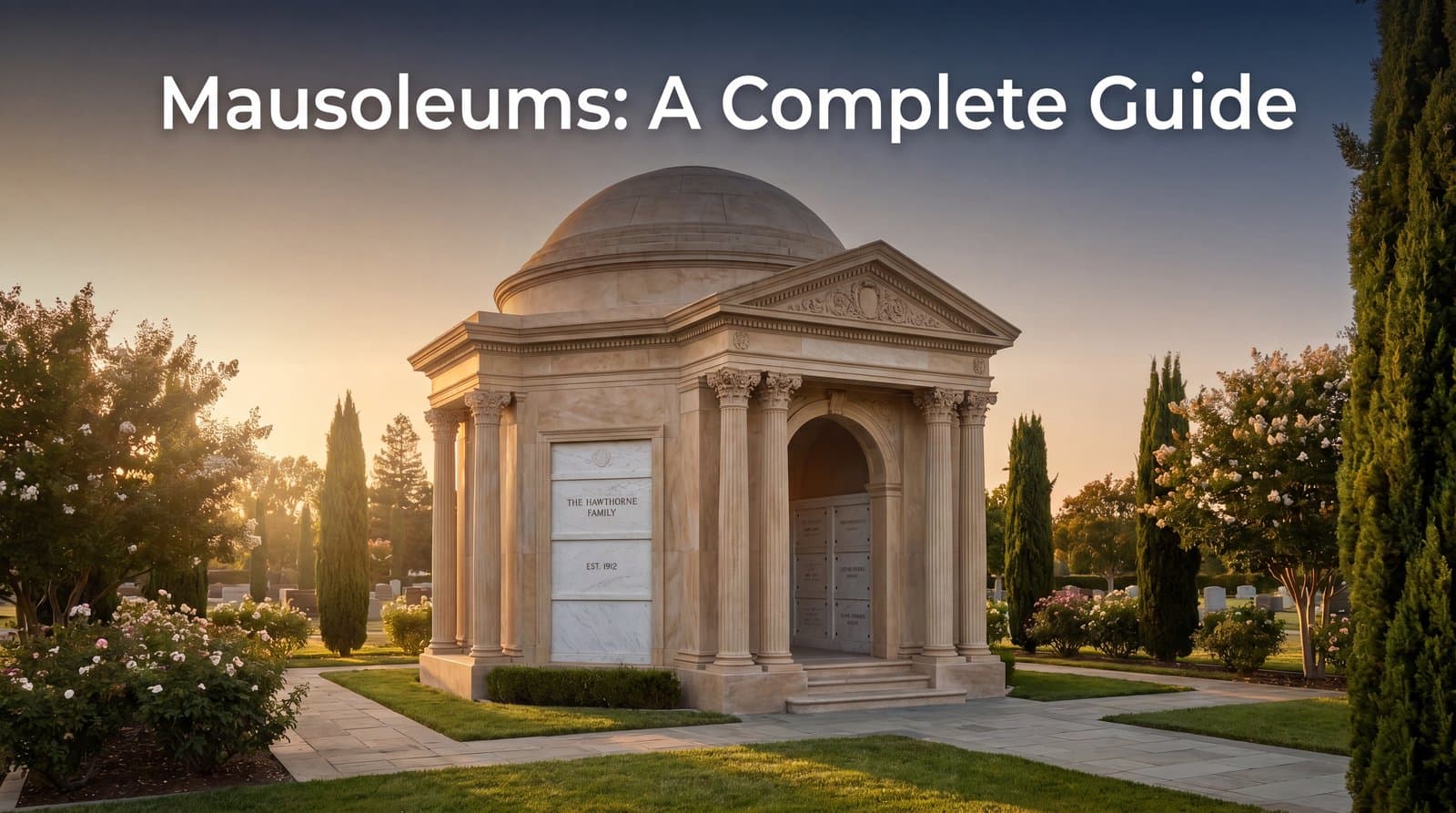
A mausoleum is a free-standing, above-ground building or monument that houses the remains of the deceased. Instead of being lowered into the earth, the casket is placed into a crypt — a sealed chamber within the structure — and closed with a stone or marble front, usually engraved with the person’s name and dates. Cremated remains can be entombed too, placed in an urn inside a crypt or in a smaller compartment called a niche, often grouped into a wall of niches known as a columbarium.
It helps to keep three terms straight. A crypt is the chamber that holds a casket. A niche holds an urn of ashes. A mausoleum is the overall structure that contains them. A mausoleum may hold a single couple or hundreds of unrelated individuals, and it can be a windowless walk-in chapel, an open-air garden wall, or a row of crypts inside a larger cemetery building. Whatever the form, the defining feature is always the same: the remains rest above ground, behind a sealed front, rather than in a dug grave.
Good to know: Unlike a traditional ground burial, mausoleum entombment usually does not require a separate burial vault or grave liner, and no in-ground grave marker is needed — the engraved crypt front serves as the memorial.
The Main Types of Mausoleums
Mausoleums fall into a few broad categories, and the type you choose has a large effect on both cost and experience.
Public or Community Mausoleums
These are large structures, built and owned by a cemetery, that hold crypts and niches for many unrelated families. You purchase the right to a specific crypt much as you would a burial plot. Many community mausoleums are indoor and climate-controlled, with hallways, seating, and stained glass where visitors can sit and reflect. They are by far the most affordable way to be entombed.
Private and Family (Walk-In) Mausoleums
A private mausoleum is a custom structure built for one family on its own cemetery lot. Walk-in versions have walls, a roof, and a working door, with crypts arranged inside and room for visitors to step in. Many include niches for cremated relatives and space for personal art, flowers, and keepsakes. This is the grandest — and most expensive — option, often built from granite or marble and personalized with sculpture and inscriptions, much like elaborate headstone inscriptions on a far larger scale.
Garden and Outdoor Mausoleums
Garden mausoleums are open-air structures with the crypt fronts facing outward rather than into an interior room. They often feature a shaded roof, benches, and landscaping, blending the permanence of entombment with the feel of an outdoor cemetery visit. They typically cost less than indoor walk-in private mausoleums.
Lawn Crypts
A lawn crypt is essentially an underground mausoleum: a pre-installed, reinforced chamber set into the ground, often designed to hold two caskets stacked or side by side. From the surface it looks like a traditional grave with a flat marker, but it combines in-ground burial with the sealed, vaulted protection of mausoleum entombment.
Typical price of a single crypt in a community mausoleum — the most affordable entombment option
How Much Does a Mausoleum Cost in 2026?
Mausoleum costs vary enormously depending on whether you are buying a single crypt in a shared building or commissioning a private structure. Here is how the main options break down in 2026, based on current cemetery and monument-builder pricing.
Several factors push these numbers up or down: the size and quality of the granite or marble, the complexity of the design and ornamentation, the number of crypts, the cemetery’s location (crypts cost more where land is scarce), and ancillary charges for delivery, foundation, installation, and opening-and-closing fees. For comparison, you may also want to review typical casket and coffin costs and cremation urn prices, since the container you choose factors into the total.
Budget tip: Don’t forget recurring costs. Most mausoleums charge annual maintenance fees of $300 to $1,500 to cover cleaning, landscaping, and repairs. Ask the cemetery for the fee schedule in writing before you commit, and confirm whether it is included in the purchase price or billed separately.
How Entombment Works
Entombment is the mausoleum equivalent of burial. After the funeral or celebration of life service, the casket is brought to the mausoleum, where cemetery staff place it into the chosen crypt — sometimes at ground level, sometimes raised, using a lift for higher rows. The crypt is then sealed at the back and the front is closed with a stone or marble shutter. An engraved crypt plate or front panel carrying the name, dates, and any chosen epitaph becomes the permanent memorial.
Because the casket rests in a dry, sealed chamber rather than in soil, mausoleum entombment avoids much of the ground moisture associated with traditional graves, and it requires no separate outer burial container. For cremated remains, the process is simpler still: the urn is placed in a niche or crypt and the front is sealed and engraved. Families who later want to scatter or divide ashes can read our guide to what to do with cremation ashes.

A quick visual guide to mausoleum types, costs, and how entombment compares to ground burial.
Mausoleum vs. Traditional Ground Burial
A mausoleum is not automatically better or worse than a grave — it’s a different set of trade-offs. Weighing them honestly helps families choose with confidence.
Advantages of a Mausoleum
- Above-ground rest. Many families find comfort in not lowering a loved one into the earth, and in being able to visit at eye level.
- Drier and weather-protected. Sealed crypts keep the casket away from ground moisture, and indoor mausoleums let you visit comfortably in any weather.
- No vault or grave marker required. The engraved crypt front replaces both the outer burial container and the in-ground headstone.
- Space-saving and lasting. Stacked crypts use less land than individual graves, and a well-built private mausoleum can stand for generations.
- Architectural dignity. Private mausoleums offer a level of personalization and grandeur that a single headstone cannot.
Drawbacks to Consider
- Higher cost. Entombment is generally more expensive than ground burial, and both cost more than cremation.
- Ongoing fees. Annual maintenance charges add up over the decades.
- Less greenery. Those drawn to natural or green burial may find stone structures less in keeping with their wishes.
- Availability. Not every cemetery offers mausoleum space, and private-mausoleum lots can be limited or pricey where land is scarce.
How to Choose the Right Mausoleum
If you’ve decided entombment is right for your family, a few practical steps will keep the process clear and on budget:
- Decide single vs. family. A single or companion crypt in a community mausoleum meets most needs affordably. A private family mausoleum makes sense only if you want a dedicated structure for multiple generations.
- Visit in person. Tour the mausoleum at different times of day. Check lighting, cleanliness, crypt height (eye-level and “heart-level” crypts cost more), and the atmosphere of the space.
- Get the full price in writing. Ask for the crypt price, opening-and-closing fee, engraving cost, and annual maintenance fee as line items.
- Confirm what’s included. Clarify whether the crypt front, lettering, and any vase or emblem are part of the price.
- Plan the memorial, not just the structure. Decide early how you’ll record the person’s story — their photos, voice, and history — so the memory is preserved alongside the name on the stone.
That last step matters more than families expect. A crypt front has room for a name, two dates, and perhaps a short line — the same constraint that limits any headstone inscription. The life itself is so much larger.
The Modern Mausoleum: Adding a Digital Memorial
A mausoleum is built to last for generations — but the engraving on the crypt can only ever say so much. This is where families are increasingly turning to technology. By adding a small, weatherproof QR code memorial to the crypt front or mausoleum entrance, visitors can scan with any phone — no app required — and open a full digital memorial page filled with photos, videos, stories, and tributes.
It’s the same idea transforming cemeteries and monuments everywhere, from smart headstones to cemetery QR codes. With Linkora, you can create a digital memorial page in minutes, keep full privacy control over who sees it, and even import family history — so the person entombed becomes a living story, not just a sealed name. Cemeteries and monument builders can add this as a service through our partner program for cemeteries.
Frequently Asked Questions About Mausoleums
What is the difference between a mausoleum and a crypt?
A mausoleum is the entire above-ground structure, while a crypt is a single sealed chamber inside it that holds one casket. A mausoleum can contain anywhere from one crypt to hundreds. Cremated remains are usually placed in a smaller compartment called a niche instead of a crypt.
How much does it cost to be entombed in a mausoleum?
A single crypt in a community mausoleum typically costs $4,000 to $8,000, plus opening-and-closing and engraving fees. Private family mausoleums start around $15,000–$17,000 and can exceed $1 million for large walk-in estate structures. Most facilities also charge annual maintenance fees of $300 to $1,500.
Is a mausoleum more expensive than burial?
Generally yes. Mausoleum entombment usually costs more than a traditional ground burial, and both cost more than cremation. However, a mausoleum needs no separate burial vault or in-ground grave marker, which offsets part of the difference, and community-mausoleum single crypts can be competitive with some burial plots.
Can cremated remains be kept in a mausoleum?
Yes. Urns holding cremated remains can be placed in a crypt or, more commonly, in a niche — a smaller compartment often grouped into a wall of niches called a columbarium. This is typically less expensive than casket entombment and is a popular choice for families who choose cremation but still want a permanent place to visit.
Can you add a QR code or digital memorial to a mausoleum?
Yes. A weatherproof QR code plaque can be attached to a crypt front or mausoleum entrance, letting visitors scan with any smartphone to open an online memorial with photos, videos, and stories. No app is needed, and platforms like Linkora let the family control privacy and content while preserving the person’s full life story for future generations.