
TL;DR
- The word memorial comes from the Latin memorialis, meaning “of or belonging to memory” — its core purpose has always been to keep a person, event, or idea from being forgotten.
- A memorial can be anything from a physical object (a headstone, a plaque, a bench) to a ritual (a service, a candlelight vigil) to a digital space (an online tribute, a QR-linked monument).
- Modern memorials are evolving fast: digital memorials are growing roughly 50% year over year, and the global deathcare market is now valued at around $130 billion in 2026.
- What makes a memorial truly meaningful is not its size or material, it is whether the story behind it can still be read, shared, and felt by the next generation.
- Linkora exists exactly for that last point, turning static monuments into living memorial pages through a simple QR code.
What Does Memorial Mean? A Word Worth Understanding
When someone says the word memorial, most of us picture a headstone, a plaque, or a quiet moment of silence. But the memorial meaning is much wider than any single object. At its heart, a memorial is anything we deliberately create to keep a person, an event, or an idea from slipping out of memory.
The word itself carries that intent. It comes from the Latin memorialis, meaning “of or belonging to memory,” which traces back to memoria (memory) and the ancient Proto-Indo-European root (s)mer-, “to remember.” The same root gives us memory, memoir, and commemoration. Every one of these words is built around the same human need: to make sure something important is not lost when the people who lived it are gone.
In English, “memorial” began appearing in the late 14th century, and by the mid-15th century it carried the specific sense of a “preservative of memory, serving for commemoration.” Six centuries later, the function has not changed. The form, however, is changing more in this decade than it has in the previous five hundred years combined. Families today are weaving traditional monuments together with digital tributes through tools like QR code memorials, blending the permanence of stone with the depth of an online life story.
The shortest answer: A memorial is any deliberate act, object, or place created to preserve memory. It can be carved, planted, written, recorded, broadcast, or coded into a QR link, but the purpose is always the same. Memory, made visible.
The Many Forms of a Memorial
Because the memorial meaning centers on memory rather than on any specific material, almost anything that intentionally preserves remembrance can be called a memorial. Most fall into one of five overlapping categories.
1. Physical Memorials
These are the forms most people picture first: headstones, gravestones, statues, monuments, plaques, memorial benches, and named buildings. They are designed to be permanent, anchored in a single place, and read with the eyes. A memorial plaque on a park bench is just as much a memorial as the Lincoln Memorial in Washington, D.C. The scale differs, the intent does not.
2. Ritual and Service Memorials
A funeral, a wake, a memorial service, a celebration of life, an anniversary gathering — these are all memorials performed in time rather than carved in stone. They are shared experiences that allow a community to remember together. Many families now mix tradition and personalization, designing services around the deceased’s music, photos, and stories. Our complete celebration of life guide walks through how to plan one of these gatherings with intention.
3. Spoken and Written Memorials
Eulogies, obituaries, written tributes, condolence letters, and remembrance speeches all qualify. The act of putting a life into words is one of the oldest forms of memorialization, predating any carved monument. A well-written eulogy is a memorial in its own right, even if it is delivered only once. If you have ever struggled to find the right words, our collection of heartfelt eulogy examples offers a starting point.
4. Living Memorials
A planted tree, a named scholarship, a charitable foundation, an annual community event — these are living memorials because they continue to grow, give, or act in the name of the person being remembered. They turn grief into ongoing contribution. For more ideas in this category, see our roundup of 25 meaningful ways to remember someone who has passed away.
5. Digital Memorials
The newest and fastest-growing category. A digital memorial is a dedicated online space where photos, videos, written tributes, audio recordings, milestones, and even family-tree connections live together. Unlike a physical monument, a digital memorial can hold thousands of items and be shared instantly across the world. If you are new to the format, our guide to what a memorial online actually is explains how families are using these pages today.
Annual growth in digital memorials and live-streamed services
How the Meaning of “Memorial” Has Evolved
For most of human history, a memorial was something you could touch. The ancient Egyptians built pyramids, the Greeks built stelae, the Romans built tombs along the Via Appia, and medieval Europeans built cathedrals with effigies sleeping in stone. The pattern persisted into the 20th century: a granite headstone, a name, two dates, and perhaps a short epitaph.
That model worked when communities were small and stable. People remembered the person behind the name because they had known them. When you visit a cemetery today, especially one that is more than two or three generations old, you can see the model breaking down. Most stones tell you only a name. The story is gone.
The modern shift is about bringing the story back. Industry analysts now value the global deathcare market at roughly $130 billion in 2026, and within that market, the share dedicated to digital and personalized services is the fastest-growing slice. Online tributes are growing roughly 30% per year, and more than 60% of U.S. funeral homes now offer livestreaming, up from 21% in 2019. The center of gravity is moving from marking a life to preserving a life.
A useful way to think about it: A traditional memorial answers the question “who was here?” A modern memorial answers the question “who were they?” The first is a record. The second is a story.
What Makes a Memorial Meaningful
Across every form, the memorials that families return to year after year tend to share a few qualities. Material, budget, and scale matter much less than these four ingredients.
A handcrafted memorial bench in a quiet garden can score perfectly against all four. A polished granite headstone with only a name and dates may score on continuity but fail on specificity and participation. A well-built digital memorial scores on every line at once, which is why the format is growing so quickly.
The Bridge: Physical and Digital Together
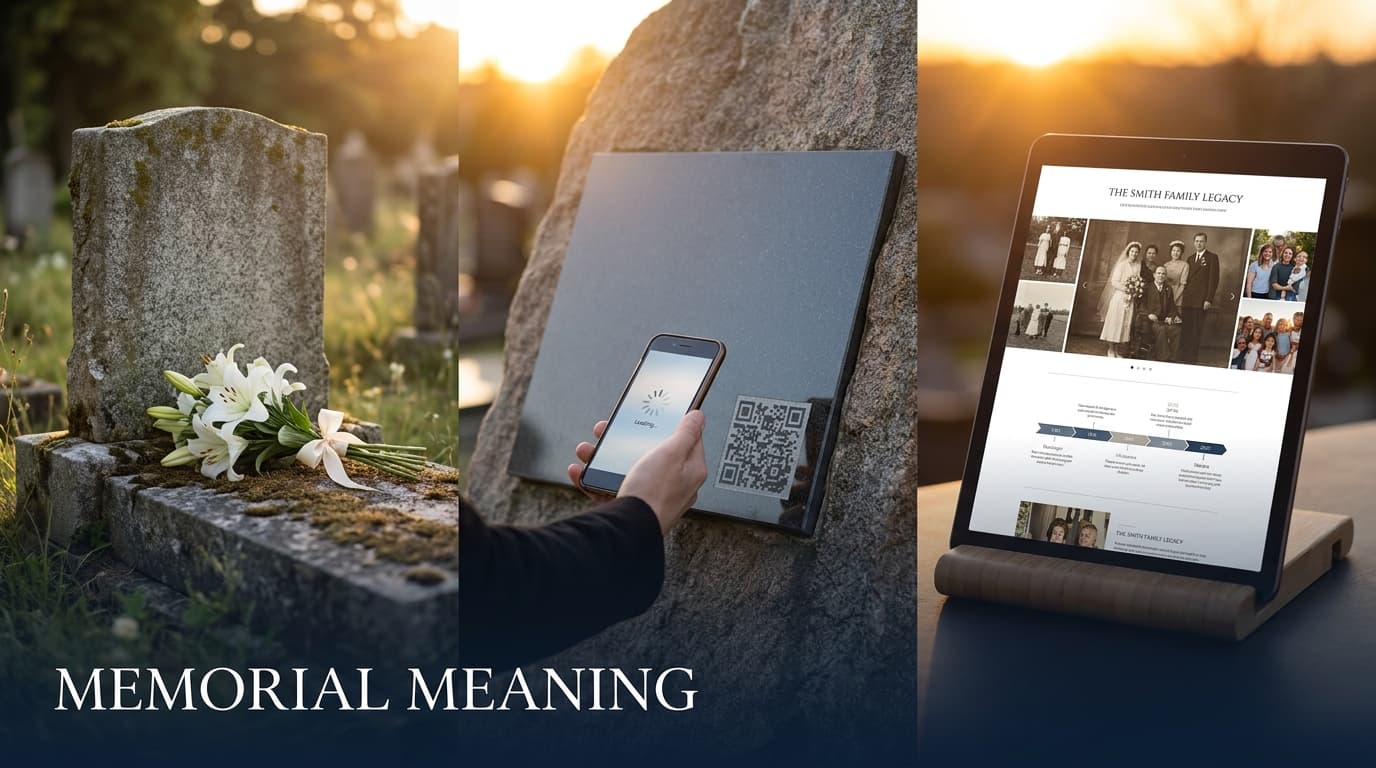
The most interesting development in memorialization right now is not the rise of digital pages by themselves. It is the way physical monuments and digital memorials are being linked together. A QR code etched into a headstone, plaque, or memorial bench is enough to bridge the two worlds. A visitor scans, and the static stone opens into a full life story — photos, voice recordings, video, a family tree, condolence messages from people who could not attend the service.
This hybrid approach respects both traditions. The monument remains the physical anchor that holds the place in the cemetery, the park, or the family plot. The digital memorial behind the code is the living archive that grows over time. For families exploring this route, our breakdown of beautiful memorial page ideas shows what these pages can look like in practice, and our guide to smart headstones and the future of cemetery memorialization covers how monument dealers are integrating QR plaques today.

The five forms of memorial and what each does best.
How to Create a Memorial That Will Last
If you are planning a memorial for a loved one, the easiest way to keep the process from feeling overwhelming is to break it down into a short sequence. The full step-by-step is in our guide to how to create a digital memorial page that truly honors a life, but here is the simplest version.
Step 1: Choose the anchor
Decide what the permanent, in-place element will be. A headstone, a plaque, a tree, a bench, or simply a chosen spot. This becomes the geographic anchor that future generations can visit.
Step 2: Gather the story
Collect photos, short videos, audio clips, written stories, important dates, and family tree details. The collection step is where most family memorials succeed or fail. Set a soft target — a hundred items is enough to start, and you can add more over time.
Step 3: Build the digital space
Create the online memorial page that will live behind the anchor. This is where the story is told in full — timeline, gallery, written biography, condolence wall, family tree. Privacy settings matter here. Most families prefer something that is visible to invited guests by default, with the option to make individual pages public.
Step 4: Link the two
Generate a QR code that connects the physical anchor to the digital page. The code can be etched onto the monument, printed onto a plaque attached to a bench, or even tucked into the back of a printed funeral program.
Step 5: Invite contribution
Share the page with family and close friends and let them add their own memories. A meaningful memorial is rarely the work of one person — it is the layered story of everyone who loved someone.
Memorial vs. Memorial Service vs. Funeral: Untangling the Terms
Because the memorial meaning is broad, the word often gets used interchangeably with related terms. In practice, three are worth keeping straight.
Funeral. A funeral is a service held with the body of the deceased present, usually before burial or cremation. It often follows specific religious or cultural traditions.
Memorial service. A memorial service is similar in spirit to a funeral but takes place without the body present. It can be held days, weeks, or even months after the death. It is more flexible in tone, format, and location.
Memorial. A memorial is the broader category. It includes services, but it also includes any object, ritual, or space dedicated to remembrance. A headstone is a memorial. A scholarship in someone’s name is a memorial. A digital tribute page is a memorial. The memorial service that happens once is part of the larger memorial that, ideally, lasts much longer.
Put simply: a funeral is an event, a memorial service is a gathering, and a memorial is the lasting form of remembrance that continues after both are over.
Frequently Asked Questions
What is the simplest definition of memorial?
A memorial is anything created on purpose to preserve the memory of a person, event, or idea. It can be an object, a place, a ritual, or a digital space. The form changes, the purpose does not.
What is the difference between a memorial and a monument?
All monuments are memorials, but not all memorials are monuments. A monument is specifically a physical structure built for remembrance, usually large and permanent. A memorial is the wider category and can include monuments along with services, rituals, written tributes, scholarships, and digital pages.
Can a digital memorial replace a traditional one?
It does not have to. Most families now use the two together. The traditional memorial holds the physical place, and the digital memorial holds the story behind it. A QR code linking the two is the simplest bridge.
How long does a memorial last?
A physical monument can last centuries if it is maintained. A ritual lasts as long as a community keeps performing it. A digital memorial lasts as long as the platform stewarding it remains active and the family keeps the account open. The most durable memorials use more than one form together.
What goes on a meaningful memorial page?
Most thoughtful memorial pages include a short biography, a curated photo gallery, a few short videos, a timeline of life milestones, a place for friends and family to leave messages, and optionally a family tree. The more specific the details, the more it feels like the actual person.
A Memorial Is Memory Made Visible
The Latin root is six centuries old in English and thousands of years older as an idea, but the practice of memorialization is being reimagined for our generation. The materials are richer, the audiences are larger, and the stories can finally fit. What used to be reduced to a name and two dates can now be a full life held in trust for the people who come next.
That is what Linkora was built for. We turn static monuments into living memorials through a simple QR code, with full privacy controls so families decide who sees what. If you are exploring what a memorial could look like for someone you love, you can view a demo memorial to see the format in practice, or claim one of your own to begin gathering the story.