
Reference + printable glossary
Funeral & memorial glossary: the words you'll hear, in plain language
Search 100+ terms, from arrangement conference to yahrzeit. Legal terms follow the FTC Funeral Rule, so you know what you're entitled to.
Reviewed by the Linkora editorial teamUpdated October 202613 cited sources6 min read
- Terms
- 118
- Terms
- Rights to know
- 6
- Rights to know
- PDF pages
- 18
- PDF pages

Before you start
Why the words matter
Funeral planning comes with its own vocabulary, usually at the moment you least want to learn it. Knowing a few terms helps you compare prices and ask for exactly what you want.
A to Z
Search the glossary
Type a word or jump to a letter. Definitions in quotation marks use the wording of the FTC Funeral Rule [2], and terms with a source link to it.
Alkaline hydrolysis
See "Aquamation." Legal in 26 US states.
Alternative container
Under the FTC Funeral Rule, "an unfinished wood box or other non-metal receptacle or enclosure, without ornamentation or a fixed interior lining." Funeral homes offering direct cremation must make one available.
Anatomical donation
Donating a body to a medical school or research program for study. When the study is complete, the program usually cremates the remains and returns them to the family; timing varies by program. It is different from organ donation.
Aquamation
Also known as alkaline hydrolysis or water cremation. The body is placed in a pressurized vessel with water and an alkaline solution, which breaks it down to bone that is then processed and returned to the family, like flame cremation. It is legal in 26 US states and returns roughly 32% more remains than flame cremation.
Arrangement conference
A meeting between the family and a funeral director to plan the funeral or memorial service: choosing services, a casket or urn, the schedule and the costs. Under the FTC Funeral Rule, the funeral home must give you a General Price List to keep, and you don't have to accept a package with items you don't want.
At-need
Funeral arrangements made at the time of death, as opposed to pre-need (pre-planned) arrangements. At-need planning often happens under time pressure and emotional stress, which is why many advisors recommend pre-planning.
Beneficiary
A person named to receive assets from an estate, life insurance policy, retirement account or trust. Designations on accounts and policies can take precedence over a will, so review them after major life changes.
Bereavement
The state of having lost someone through death. Grief is the emotional response to the loss; mourning is the way we show grief in public. Many employers offer bereavement leave, but policies vary.
Body preparation
The process of preparing a deceased person's body for viewing, burial, or cremation. This may include washing, dressing, cosmetic application, and possibly embalming, depending on the family's wishes and legal requirements.
Burial permit
A legal document issued by a local government authority that authorizes the burial or cremation of a deceased person. The funeral director typically obtains the burial permit on behalf of the family after the death certificate is filed.
Burial vault
An outer burial container, typically concrete, steel or fiberglass, that encloses the casket in the grave. Vaults are usually sealed; grave liners are not. No state law requires one, but many cemeteries do, to keep the ground from settling.
Calling hours
A designated period when the public may visit the funeral home to view the deceased and offer condolences to the family. Calling hours are the same as a visitation or viewing and may take place the day or evening before the funeral.
Cash advance item
An item the funeral home buys on your behalf from someone else, such as flowers, obituary notices or certified death certificates. The FTC Funeral Rule covers anything described as a "cash advance," "accommodation," "cash disbursement" or similar.
Casket
A rectangular container used for viewing and burial of the deceased. A casket is distinguished from a coffin by its shape: caskets are rectangular with a split lid, while coffins are tapered (wider at the shoulders, narrower at the feet). In the U.S., "casket" is the more commonly used term.
Celebration of life
A memorial event that focuses on honoring and celebrating the life of the deceased, rather than mourning their death. Celebrations of life are typically less formal than traditional funerals, may be held weeks or months after the death, and often take place in non-traditional venues.
Cemetery
A designated area of land set aside for the burial of the dead. Cemeteries may be public (operated by a municipality), private (operated by a religious organization or corporation), or national (operated by the federal government for veterans).
Cenotaph
A memorial monument erected to honor a person whose remains are buried elsewhere or were never recovered. Cenotaphs are common in military contexts and at sites of mass disasters.
Chapel
A room or building within a funeral home, hospital, or cemetery designated for religious services and ceremonies. Many funeral homes have one or more chapels of varying sizes to accommodate different types of services.
Coffin
A tapered container, wider at the shoulders and narrower at the feet, used for burial. While often used interchangeably with "casket" in everyday language, a coffin is technically a different shape. Coffins are more common in European and Jewish traditions.
Columbarium
A structure, often a wall or freestanding building, with small compartments called niches designed to hold urns containing cremated remains. Columbariums are found in cemeteries, churches, and memorial gardens.
Committal service
A brief ceremony held at the final resting place (graveside, mausoleum, or columbarium) during which the remains are committed to their final disposition. This is often the last formal part of the funeral process.
Condolence
An expression of sympathy and sorrow to someone who has experienced a loss. Condolences may be offered in person, by card, by phone, or through a digital memorial page.
Coroner
A public official (in some jurisdictions, an elected one) responsible for investigating deaths that are sudden, unexplained, or potentially the result of criminal activity. The coroner determines the cause and manner of death and may order an autopsy.
Cortege
A funeral procession, typically a line of vehicles traveling from the funeral home or place of worship to the cemetery. The hearse leads the procession, followed by the immediate family and other mourners.
Cremains
An informal term for cremated remains: the bone fragments left after cremation, processed into a coarse powder and returned to the family, usually in a temporary container or an urn.
Cremation
Reducing a body to bone fragments with intense heat in a chamber called a retort. Cremation is now the most common choice in the US: the NFDA projected a 63.4% cremation rate for 2025, compared with 31.6% for burial. No state or local law requires a casket for cremation.
Crematorium
A facility where cremation takes place. A crematorium houses one or more cremation chambers (retorts) and may be part of a funeral home, cemetery, or standalone facility.
Crypt
An enclosed space within a mausoleum used for entombment of a casket. Crypts can be at various levels, with eye-level and above-ground positions typically being more expensive.
Death certificate
An official government document that records the date, place and cause of a person's death. Certified copies are needed to claim insurance, close accounts, transfer property and settle the estate. Ask each institution whether it needs a certified original, and order enough copies at the start.
Death doula
Also called an end-of-life doula or death midwife, a trained companion who provides non-medical support to dying individuals and their families. Services may include emotional support, legacy projects, vigil planning, and guidance through the dying process.
Decedent
A legal term referring to a person who has died. This term is commonly used in legal documents, death certificates, and estate proceedings.
Direct burial
Also called immediate burial. Under the FTC Funeral Rule, it is burial "without formal viewing, visitation, or ceremony with the body present, except for a graveside service." It is usually the least expensive burial option.
Direct cremation
Under the FTC Funeral Rule, cremation "without formal viewing, visitation, or ceremony with the body present." A memorial service can still be held later. Funeral homes that offer direct cremation must make an alternative container available, and no law requires a casket for cremation.
Disinterment
The removal of buried remains from a grave. Synonymous with exhumation. Disinterment typically requires a court order and notification of the local health department.
Disposition
The final handling of the remains of a deceased person. Common forms of disposition include burial, cremation, entombment, aquamation, and donation to science. Laws governing disposition vary by state.
Embalming
A process that replaces blood with a chemical solution to temporarily slow decomposition, often for a public viewing. No state law requires routine embalming for every death. Refrigeration is often an alternative, and a funeral home must tell you embalming isn't required by law except in certain cases.
Endowment care
A fund maintained by a cemetery to cover the long-term maintenance of the grounds. A portion of every plot purchase typically goes into the endowment care fund. Also called perpetual care.
Entombment
The placement of a casket in a crypt within a mausoleum or other above-ground structure, as opposed to in-ground burial.
Epitaph
An inscription on a headstone or memorial marker, typically a brief phrase or sentiment honoring the deceased. Famous epitaphs range from solemn to humorous.
Estate executor
The person named in a will to carry out the deceased's wishes and manage their estate through probate. Also called a "personal representative" in some states. The executor is responsible for inventorying assets, paying debts, filing taxes, and distributing property to beneficiaries.
Eulogy
A speech or written tribute honoring a deceased person, typically delivered during a funeral or memorial service. Eulogies often share personal stories, celebrate the person's character and achievements, and offer comfort to those grieving.
Exhumation
The legal process of removing a buried body from the ground. Exhumation typically requires a court order and may be done for reburial in a different location, legal investigation, or identification purposes.
Final disposition
The ultimate placement or handling of a deceased person's remains. This is the legal term used on death certificates and other documents to record how the body was handled (burial, cremation, donation, etc.).
Final expenses
The costs that come with a death: the funeral, burial or cremation, medical bills, legal fees and outstanding debts. In 2023 the NFDA's median price for a funeral with viewing and burial was $8,300, and $6,280 with cremation, before cemetery costs such as a plot or marker.
First call
The initial contact made to a funeral home to report a death and request their services. During the first call, the funeral home arranges to transport the deceased from the place of death to their facility.
Flowers of remembrance
Floral arrangements sent to a funeral or memorial service as a gesture of sympathy. Common types include casket sprays (placed on top of the casket), standing sprays, wreaths, and basket arrangements.
Funeral director
A licensed professional who manages all aspects of a funeral, including body preparation, paperwork (death certificate, permits), coordinating services, and supporting the family. Licensing requirements vary by state but typically include education and an apprenticeship.
Funeral goods
The FTC's term for the goods sold directly to the public for use in connection with funeral services, such as caskets, urns and outer burial containers.
Funeral home
A licensed establishment that provides funeral services, including body preparation, viewing facilities, ceremony space, and coordination of burial or cremation. Also known as a mortuary or funeral parlor.
Funeral Rule
The FTC regulation that protects funeral shoppers. You have the right to a General Price List to keep, to prices over the phone, to choose only the goods and services you want, to use a casket or urn bought elsewhere without a fee, and to an itemized statement of what you selected. Funeral homes must also disclose that embalming isn't generally required by law.
Funeral services
The FTC's term for services used to care for and prepare a body for burial, cremation or other final disposition, and to arrange, supervise or conduct the funeral ceremony.
General Price List (GPL)
The itemized list of a funeral home's goods and services with their prices. Under the FTC Funeral Rule, the funeral home must give you one to keep when you ask about arrangements in person.
Grave liner
A basic outer burial container placed in a grave to keep the ground from settling. Unlike a vault, a liner is not sealed. No state law requires a liner or vault, but many cemeteries require one or the other.
Graveside service
A funeral or memorial service conducted at the grave site rather than in a funeral home or place of worship. Graveside services are typically shorter and may serve as the entire service or as a committal following a larger ceremony.
Green burial
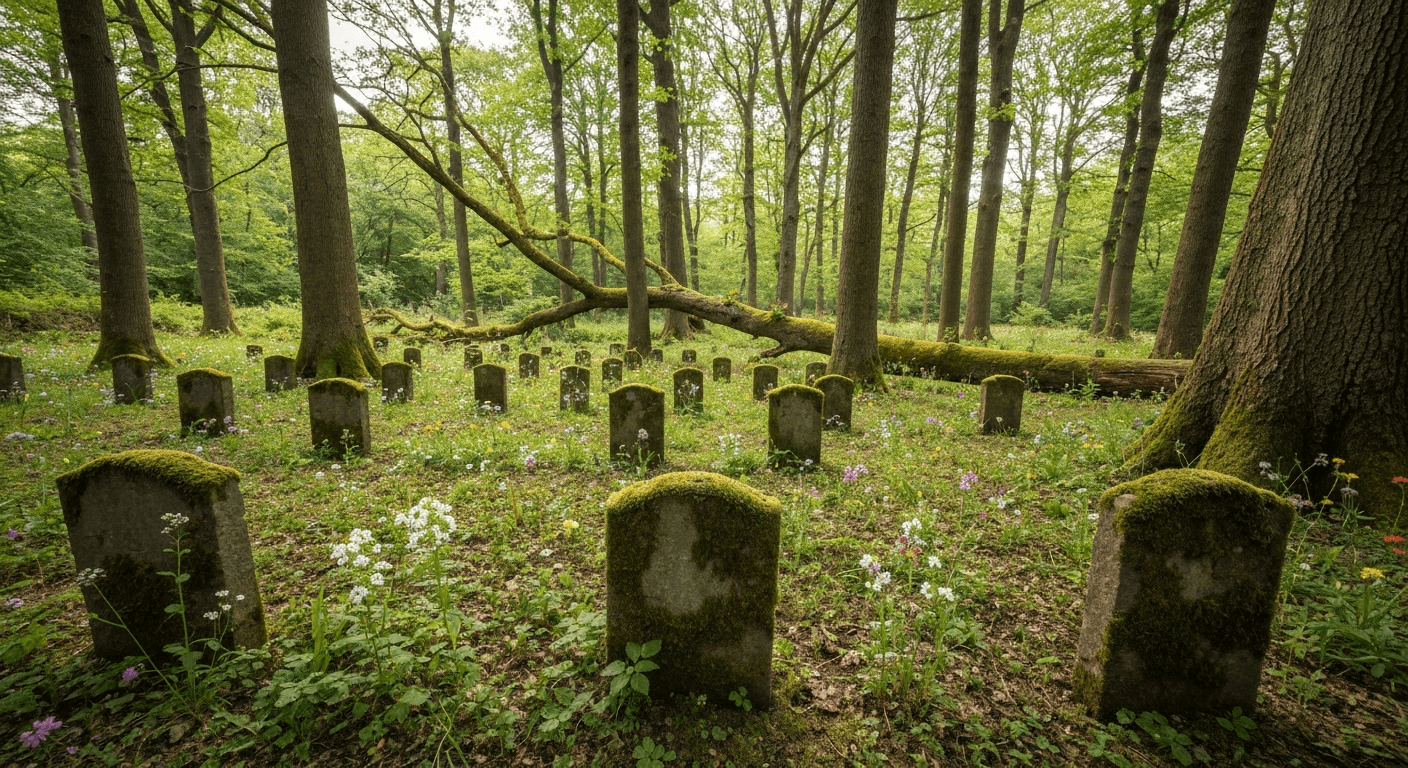
Burial that avoids embalming chemicals and uses a biodegradable casket or shroud, so the body can return to the earth naturally. Some green cemeteries use natural markers such as trees or stones. Green Burial Council certification applies to full-body burial at a cemetery.
Grief counseling
Professional support to help individuals process their grief after a loss. Grief counseling may be provided by licensed therapists, social workers, religious leaders, or peer support groups. Many funeral homes offer or can recommend grief counseling services.
Ground burial
The traditional practice of placing a casket or container in the earth. Also called in-ground burial or earth burial. Ground burial may take place in a cemetery, church yard, or in some states, on private property.
Guest book
A register or book at a funeral or memorial service where attendees sign their names, often with a brief message of condolence. Digital guest books on memorial websites serve the same purpose for those who cannot attend in person.
Hearse
A specially designed vehicle used to transport the casket or coffin from the funeral home to the place of service and then to the cemetery. Modern hearses are typically modified luxury vehicles.
Honorarium
A payment made to clergy, musicians, or other participants in a funeral service as a token of gratitude for their time and services. Honorariums are typically arranged by the funeral director and paid from the family's funds.
Hospice
Care focused on comfort and quality of life rather than cure, for people with a terminal illness. To get Medicare's hospice benefit, a doctor must certify a life expectancy of 6 months or less.
Human composting
Also called natural organic reduction (NOR). The body is placed in a vessel with plant material such as wood chips and straw and gently turned into soil over several weeks. As of 2026 it is legal in 14 states, including Washington, Oregon, Colorado, Vermont, California and New York.
Immediate burial
See "Direct burial." The FTC Funeral Rule's term for burial without a formal viewing, visitation or ceremony with the body present, except for a graveside service.
In lieu of flowers
A request, often included in an obituary, asking that mourners make a charitable donation instead of sending flowers to the funeral. The phrase is typically followed by the name of a specific charity or cause meaningful to the deceased or their family.
Interment
The act or ceremony of placing remains in their final resting place. It usually means burial in the ground, but is also used for placement in a mausoleum or columbarium.
Interment rights
The legal right to use a specific burial plot, niche, or crypt. Purchasing interment rights does not mean owning the land itself, but rather the right to be buried in that specific space, subject to the cemetery's rules.
Inurnment
The act of placing cremated remains (in an urn) in a final resting place, such as a columbarium niche, mausoleum, or burial plot.
Jewish mourning practices
Jewish tradition follows a structured mourning process: shiva (seven days of intensive mourning at home), shloshim (30 days of reduced mourning), and the first yahrzeit (anniversary of the death). Burial typically occurs within 24 hours, the body is not embalmed, and a simple wooden casket is used.
Kaddish
A Jewish prayer recited by mourners during and after the mourning period. The Mourner's Kaddish is traditionally recited daily for 11 months after the death of a parent and for 30 days after the death of other close relatives. It is also recited on the yahrzeit (anniversary of the death).
Keepsake urn
A small urn designed to hold a portion of cremated remains, allowing family members to each keep some of the ashes. Keepsake urns come in many forms, including jewelry, small vessels, and glass art pieces.
Legacy contact
A person you choose to look after your accounts after your death. Apple, Facebook and Instagram let you name a legacy contact; Google's equivalent is Inactive Account Manager.
Lying in state
The practice of placing the body of a deceased person in a public or government building so that the public may pay their respects. In the United States, lying in state in the U.S. Capitol Rotunda is an honor typically reserved for government officials, military leaders, and other notable citizens.
Mausoleum
An above-ground structure containing one or more crypts for entombment of caskets. Mausoleums may be community structures (housing many crypts), family-sized, or individual. They offer an alternative to in-ground burial.
Medical examiner
A licensed physician (usually a forensic pathologist) appointed to investigate deaths that are sudden, violent, suspicious, or unexplained. Unlike a coroner, a medical examiner is always a physician. They determine the cause and manner of death.
Memorial plaque
A flat tablet, typically made of bronze or stone, placed at a memorial site to honor the deceased. Memorial plaques may be mounted on walls, benches, trees, or other structures and often include the person's name, dates, and a brief inscription.
Memorial service
A ceremony honoring the deceased held without the body present. Memorial services may take place days, weeks, or even months after the death and are often held when cremation has already occurred or when the body has been donated to science.
Memorialization
The act of creating a lasting tribute to a deceased person. This can include headstones, memorial plaques, digital memorials, planted trees, named scholarships, or dedicated benches. Memorialization helps keep the person's memory alive for future generations.
Monument
A permanent marker placed at a grave site, typically made of granite, marble, or bronze. Monuments include headstones (vertical markers), flat markers (flush with the ground), and ledger stones (covering the entire grave).
Mourning
The ways people show grief outwardly, through rituals, customs, clothing or gatherings. Grief is the inner response to loss; mourning is how we show it in public.
Natural organic reduction
See "Human composting." Legal in 14 states as of 2026.
Next of kin
A person's closest living relative, who is typically responsible for making funeral arrangements and other decisions regarding the deceased. The legal definition and order of priority for next of kin vary by state.
Niche
A small compartment in a columbarium designed to hold one or more urns containing cremated remains. Niches come in various sizes and may feature a glass front, engraved plate, or space for photos and small mementos.
Notification
The process of informing family, friends, employers, and institutions of a person's death. Notifications may be made by phone, email, letter, or through an obituary. Many families find this to be one of the most difficult tasks after a death.
Obituary
A published notice announcing a person's death, typically including biographical information, surviving family members, and details about funeral or memorial services. Obituaries may appear in newspapers, online obituary sites, or on a funeral home's website.
Obituary notice
A paid announcement in a newspaper or online publication informing the public of a person's death, usually with the full name, age, date of death and service details. Prices vary widely by publication and length, so ask for a quote before submitting.
Opening and closing
Cemetery charges for excavating (opening) a grave and filling (closing) it afterward. These fees are separate from the price of the plot and vary widely, so ask for them in writing.
Organ donation
Surgically recovering organs or tissues from a donor for transplant to someone who needs them. According to HRSA, every donor can save 8 lives and enhance over 75 more.
Outer burial container
The FTC's term for any container placed in the grave around the casket, including burial vaults, grave boxes and grave liners. Not required by state law anywhere in the US, though many cemeteries require one.
Pallbearer
A person who helps carry or escort the casket during a funeral service. Traditionally, six pallbearers carry the casket, though some services use honorary pallbearers who walk alongside. Being asked to serve as a pallbearer is considered an honor.
Perpetual care
An ongoing maintenance agreement for a cemetery plot, funded by a one-time fee paid at the time of purchase. Perpetual care covers mowing, landscaping, and general upkeep of the cemetery grounds in perpetuity.
Power of attorney
A legal document that authorizes another person to act on your behalf in financial, legal, or medical matters. A power of attorney becomes void upon the death of the person who created it, at which point the executor takes over.
Pre-need
Funeral arrangements made in advance of death, also called pre-planning. Pre-need arrangements allow individuals to specify their wishes and, in many cases, lock in prices. Pre-need plans may be funded through insurance policies, trusts, or pay-over-time installments.
Probate
The legal process of validating a will and distributing a deceased person's estate under court supervision. Probate involves identifying assets, paying debts and taxes, and distributing remaining property to beneficiaries. The process can take several months to over a year depending on the complexity of the estate.
Procession
The formal movement of mourners, typically in vehicles, from the funeral service to the cemetery or place of final disposition. In many states, funeral processions have the legal right-of-way and may be escorted by police.
Prolonged grief disorder
A mental health condition added to the DSM-5-TR in 2022: intense, persistent grief that interferes with daily life, at least a year after the loss for adults (6 months for children and teens). It affects an estimated 4% to 15% of bereaved adults.
QR memorial
A memorial page reached by scanning a QR code on a headstone, plaque, bench or service program. Visitors can see photos, read stories and leave tributes. Linkora memorials are provided free through participating monument dealers, or cost $149 once when bought directly.
Repast
A meal or gathering held after a funeral or memorial service, providing an opportunity for mourners to share food, comfort one another, and share memories. The repast may be held at a family home, community center, restaurant, or place of worship.
Repatriation
Transporting a person's remains from the country where they died to their home country for burial or cremation. It involves permits, consulate paperwork and coordination between funeral homes; requirements such as embalming or a sealed container depend on the countries and carriers involved.
Requiem
A Mass or church service for the dead in the Catholic tradition, or more broadly, a musical composition written in memory of the deceased. Famous requiems include those by Mozart, Brahms, and Faure.
Resomation
A trademarked name for alkaline hydrolysis (also called aquamation). The process uses water and an alkaline solution in a pressurized vessel to reduce the body to bone ash, which is returned to the family. The term is primarily used in the United Kingdom and parts of Europe.
Retort
The chamber inside a crematory where cremation takes place. It is lined with heat-resistant brick and reaches very high temperatures.
Scattering
The dispersal of cremated remains in a meaningful location, such as a garden, body of water, mountain, or designated scattering area within a cemetery. Laws governing scattering vary by state and locality. Scattering at sea is regulated by the EPA and must occur at least three nautical miles from shore.
Sexton
A cemetery caretaker responsible for maintaining the grounds, digging graves, and managing burial records. In some traditions, the sexton also maintains the church building and rings the church bells.
Shiva
A seven-day mourning period observed in Judaism following the burial. During shiva, the immediate family stays home and receives visitors who come to offer condolences. Mirrors are covered, mourners sit on low chairs, and the community brings food for the family.
Slumber room
A private viewing room at a funeral home where the family can spend time with the deceased before or after the public viewing. Slumber rooms offer a quieter, more intimate setting than the main visitation area.
Statement of Goods and Services Selected
The itemized statement a funeral home must give you listing every good and service you chose, the price of each and the total cost. Check it before you pay.
Survivor benefits
Financial benefits available to the surviving spouse, children, or dependents of a deceased person. Sources include Social Security (up to $255 lump-sum death benefit plus monthly payments), employer life insurance, veterans' benefits, and pension plans.
Transfer of remains
The process of moving a deceased person's body from the place of death to a funeral home, crematorium, or other facility. The first transfer is often called the "first call" and is typically performed by the funeral home.
Tribute
An expression of honor or remembrance for a deceased person. Tributes can take many forms, including speeches, written messages, photo displays, charitable donations, planted trees, and digital memorials.
Trust
A legal arrangement in which one party (the trustee) holds assets on behalf of another (the beneficiary). Trusts are often used in estate planning to avoid probate, minimize taxes, and provide for heirs according to specific conditions set by the creator of the trust.
Undertaker
An older term for a funeral director, still used in some regions and traditions. The term originated in the 17th century when individuals would "undertake" the responsibility of preparing the dead for burial.
Urn
A container designed to hold cremated remains. Urns come in a wide variety of materials (ceramic, wood, metal, biodegradable), sizes, and designs. Some are intended for permanent display, while others are designed for burial, placement in a columbarium, or scattering.
Vault
See "Burial vault." A sealed outer burial container that encloses the casket. No state law requires one, but many cemeteries require a vault or grave liner.
Vigil
A period of watchful waiting, often held the evening before a funeral. In the Catholic tradition, the vigil (also called a wake or rosary vigil) includes prayers and often takes place at the funeral home. Other traditions may hold a vigil at the home of the deceased or a place of worship.
Visitation
A scheduled time for friends and family to view the deceased and pay their respects before the funeral service. Also called a viewing, calling hours, or wake (depending on the tradition). Visitations may be open-casket or closed-casket.
Wake
A gathering held before the funeral where friends and family view the body and pay their respects. The term historically referred to the practice of "watching" over the body through the night. In modern usage, "wake" and "visitation" are often used interchangeably, though cultural connotations may differ.
Will
A legal document in which a person (the testator) specifies how their assets should be distributed after death, names an executor to manage the estate, and may designate guardians for minor children. A will must typically be witnessed and may need to go through probate to be enforced.
Yahrzeit
The anniversary of a death in the Jewish tradition, observed according to the Hebrew calendar. On the yahrzeit, family members light a special memorial candle that burns for 24 hours, recite the Kaddish prayer, and may visit the grave. The word comes from Yiddish and means "time of year."
Free printable PDF
Get the Funeral & Memorial Glossary
An 18-page printable PDF: the full A-Z glossary, a Funeral Rule rights checklist, a funeral home price comparison sheet and a notes page, all fillable.
We'll send the PDF plus a few short, helpful follow-ups. Unsubscribe anytime. Privacy
Know before you go
Your rights under the FTC Funeral Rule
The Funeral Rule is the federal regulation behind many of these terms. Under it, you have the right to [1]:
- A General Price List that is yours to keep.
- Price information over the phone, if you ask.
- Choose only the goods and services you want, instead of a package.
- Use a casket or urn you bought elsewhere, with no handling fee.
- A Statement of Goods and Services Selected, listing each item, its price and the total.
- Be told that embalming isn't required by law except in special cases.
Terms in order
What happens when
Where the most common terms fit in the usual sequence of events. Every family's timeline is different.
At the death
Pronouncement
By a doctor or hospice nurse, or a coroner or medical examiner if the death is sudden or unexplained.Within hours
First call and transfer of remains
The funeral home is contacted and moves the body to its care.Within a day or two
Arrangement conference
You receive the General Price List and choose goods and services [1].Before paying
Statement of Goods and Services Selected
Every item, its price and the total [1].Days later
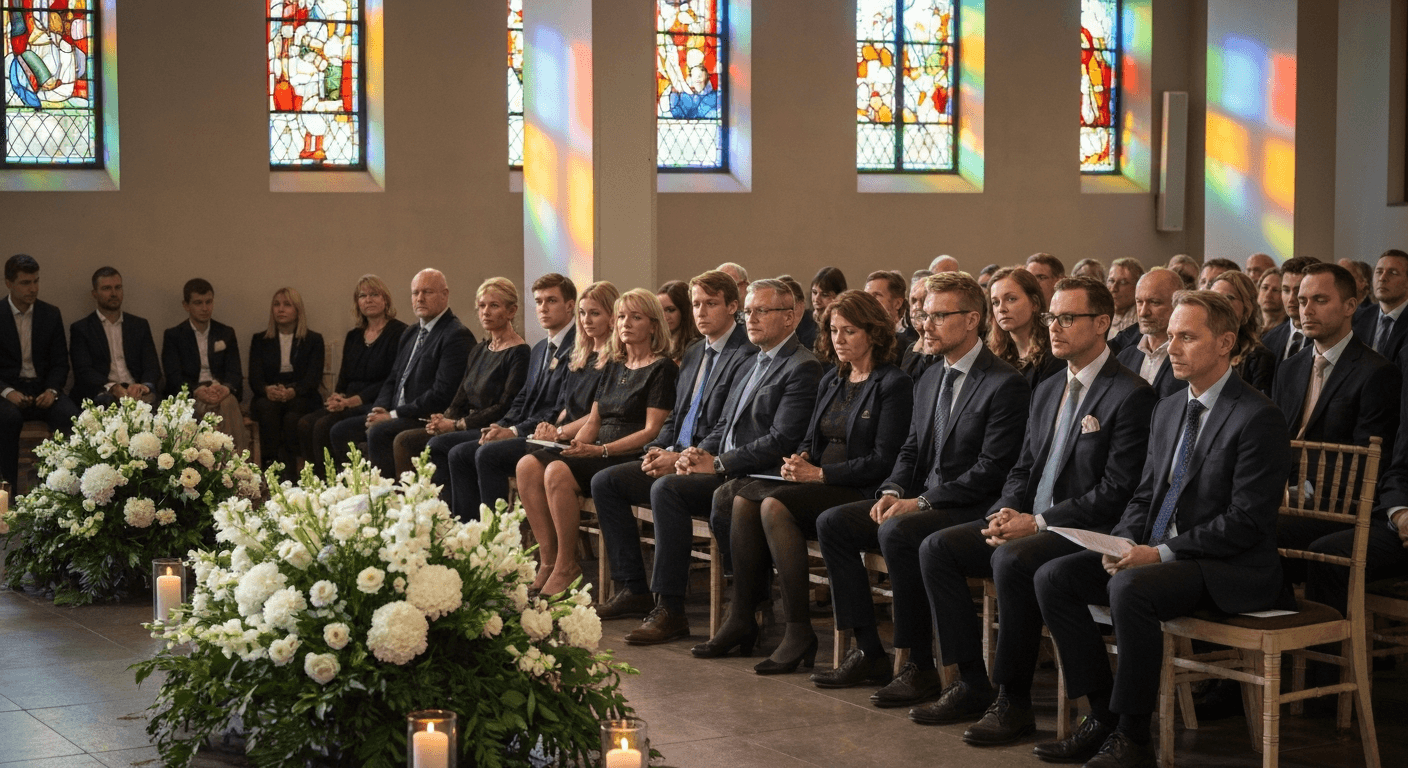
Visitation, funeral or memorial service, committal
A wake or viewing, the service, then the short ceremony at the resting place.Final disposition
Interment, entombment, inurnment or scattering
In the ground, in a crypt, in a columbarium niche, or scattered. At sea, at least 3 nautical miles from land [8].Weeks to months
Death certificates, probate and memorialization
Settling the estate, and choosing a monument or memorial.
After the service, many families gather photos and stories in one place. A memorial page can do that, and a QR memorial links it to the headstone.
Options
Choices for final disposition
| Option | What it means | Good to know |
|---|---|---|
| Traditional burial | Casket burial in a cemetery, usually after a viewing and service | Many cemeteries require an outer burial container [1] |
| Immediate burial | No viewing or ceremony with the body present, except a graveside service [2] | Usually the lowest-cost burial option |
| Direct cremation | Cremation without a viewing or ceremony with the body present [2] | No casket required; an alternative container is fine [1],[2] |
| Alkaline hydrolysis | Water-based cremation, also called aquamation | Legal in 26 states; about 32% more remains than flame cremation [6] |
| Human composting | Natural organic reduction into soil | Legal in 14 states as of 2026 [7] |
| Green burial | No embalming chemicals; a biodegradable casket or shroud | GBC certification covers full-body burial at a cemetery [9] |
| Burial at sea | Cremated remains placed in the ocean | At least 3 nautical miles from land [8] |
| Body donation | Donation to a medical school or research program | Different from organ donation; each organ donor can save 8 lives [11] |
Side by side
Commonly confused terms
| These two | The difference |
|---|---|
| Casket vs. coffin | A casket is rectangular; a coffin is tapered, wider at the shoulders. |
| Vault vs. grave liner | Both are outer burial containers. A vault is usually sealed; a liner isn't. Neither is required by state law [1]. |
| Coroner vs. medical examiner | A coroner may be an elected official; a medical examiner is always a physician. |
| Funeral vs. memorial service | A funeral usually has the body present; a memorial service doesn't. |
| Interment, entombment, inurnment | Placing remains in the ground, in a crypt, or (for an urn) in a niche or grave. |
| Grief vs. mourning | Grief is the emotional response to loss; mourning is how we show it in public [12]. |
| Hospice vs. palliative care | Hospice is comfort care for a terminal illness; Medicare's benefit needs a doctor to certify a life expectancy of 6 months or less [10]. |
FAQ
Questions about funeral terms
Can’t find what you’re looking for? Read all FAQs or ask us directly.
Important Disclaimer
This content is for informational purposes only and does not constitute legal advice. Laws vary by jurisdiction. Consult a qualified attorney for advice specific to your situation.
Last reviewed: October 7, 2026
Sources
Where these facts come from
- [1]The FTC Funeral Rule · Federal Trade Commission
- [2]16 CFR 453.1, Funeral Industry Practices: Definitions · Cornell Law School LII (FTC regulation)
- [3]Embalming: what you should know · Funeral Consumers Alliance
- [4]2023 NFDA General Price List Study · National Funeral Directors Association, 2023
- [5]2025 Cremation & Burial Report · National Funeral Directors Association, 2025
- [6]Alkaline Hydrolysis · Cremation Association of North America
- [7]Support composting legislation · The Order of the Good Death
- [8]Burial at Sea · US Environmental Protection Agency
- [9]What is green burial? · Green Burial Council
- [10]Hospice care coverage · Medicare.gov
- [11]Organ donation statistics · HRSA (organdonor.gov)
- [12]Grief, Bereavement, and Coping With Loss (PDQ) · National Cancer Institute
- [13]Prolonged Grief Disorder · American Psychiatric Association
Reviewed by the Linkora editorial team against the sources above. Last reviewed October 2026. Spotted something out of date? Tell us.
Keep exploring
Related free resources


From the blog
Stories and guides from the blog


Every term points to a person
A Linkora memorial keeps the story behind the paperwork: photos, stories and tributes from everyone who loved them.
Send us a message
Fill out the form and we'll be in touch shortly.
By submitting you agree to our Privacy Policy