
TL;DR
- Cemetery QR codes are small, scannable codes placed on headstones or memorial plaques that link visitors to rich digital tribute pages with photos, videos, and stories.
- The cemetery software market is projected to grow from $5.3 billion to $11.6 billion by 2032, with QR memorial technology driving a significant share of that expansion.
- Cemeteries benefit from increased visitor engagement, modernized operations, and new revenue streams by offering QR code memorial services.
- Families gain multimedia memorial pages that preserve a loved one’s legacy far beyond what a traditional headstone inscription can hold.
- Getting started is simple for both families and cemetery administrators, with platforms like Linkora handling everything from QR code generation to digital memorial page creation.
Introduction: Cemetery QR Codes Are Changing How We Remember
Cemetery QR codes represent one of the most meaningful shifts in how we honor and remember the people we have lost. In a world where over 102 million Americans are expected to scan a QR code in 2026 alone, it was only a matter of time before this familiar technology found its way into one of humanity’s most enduring traditions: memorialization. Today, cemeteries across the country are embracing digital technology by adding QR codes to headstones, grave markers, and memorial plaques, giving visitors instant access to rich digital tributes that go far beyond a name and a pair of dates.
According to Verified Market Research, the death care services industry is valued at $143.32 billion in 2025 and is expected to reach $217 billion by 2035. Within that massive market, digital memorial technology, often called “deathtech,” is one of the fastest-growing segments. Cemetery QR codes sit right at the intersection of this growth, bridging the gap between physical monuments and the digital world. Whether you are a family looking to preserve a loved one’s story or a cemetery administrator exploring smart headstone technology, this guide covers everything you need to know about how QR codes are reshaping the cemetery experience.
Global death care services market value in 2025, with digital memorial tech among the fastest-growing segments
What Are Cemetery QR Codes and How Do They Work?
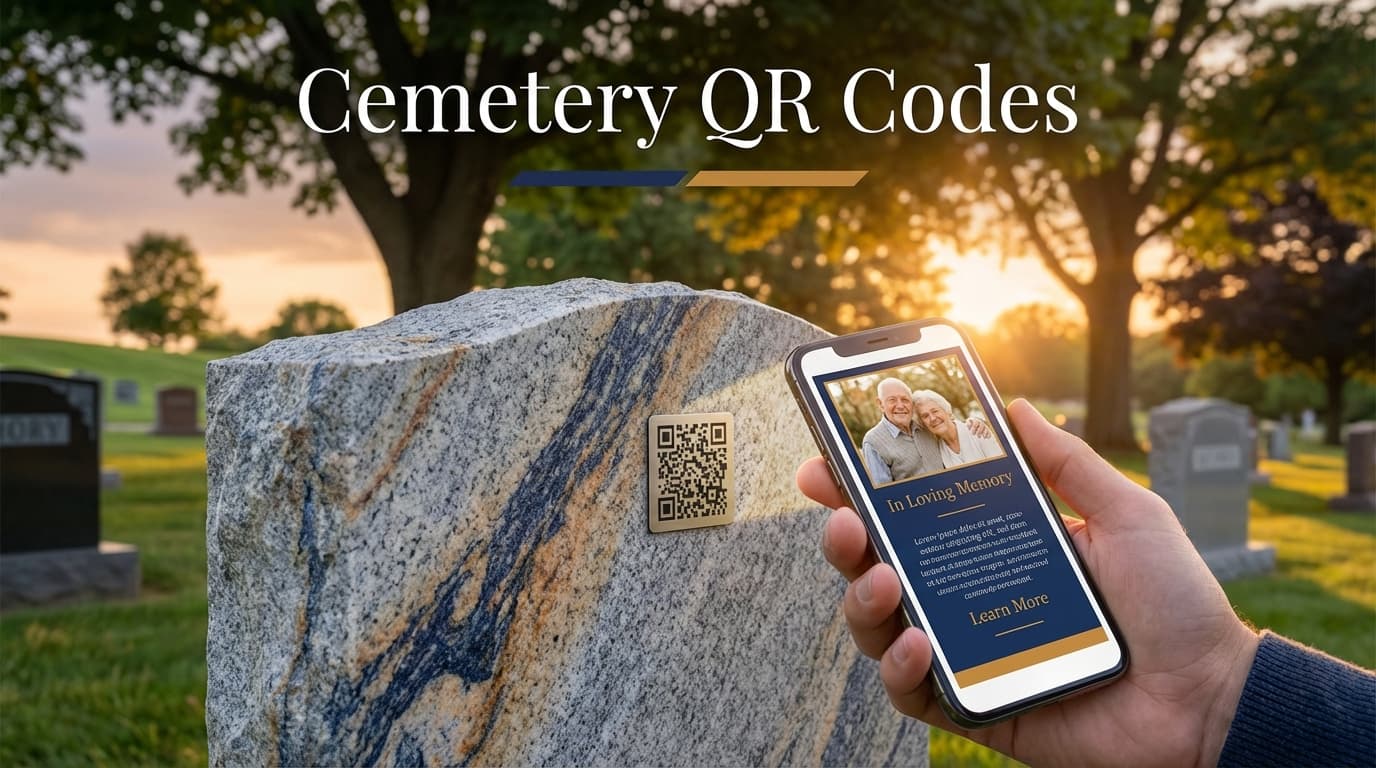
At their core, cemetery QR codes are small, machine-readable codes that are placed on or near a grave marker. When a visitor scans the code with their smartphone camera, they are instantly taken to a dedicated digital memorial page. No special app is needed. The process is as simple as pointing a phone at the code and tapping the link that appears.
The digital memorial page behind the QR code can hold virtually unlimited content compared to a traditional headstone inscription. Families can upload photos, share videos, write detailed biographies, create timelines of important life events, and even enable a guestbook where friends and relatives leave messages of remembrance. It transforms a static grave visit into an immersive experience that tells the full story of a life lived. If you are new to the concept, our complete guide to QR code memorials provides a thorough introduction.
How it works: A durable QR code plaque is attached to a headstone or grave marker. A visitor scans it with any smartphone. The phone opens a digital memorial page with photos, videos, a biography, a family tree, and a guestbook. No app download required.
Types of Cemetery QR Code Products
Cemetery QR codes come in several formats designed to withstand years of outdoor exposure. The most common options include:
| Product Type | Material | Durability | Best For |
|---|---|---|---|
| QR Medallion (e.g., Turning Hearts) | Aluminum or stainless steel | 20+ years | Existing headstones |
| Ceramic QR Plaque | Fired ceramic tile | 15+ years | Flush markers and monuments |
| Laser-Etched QR Code | Granite or stone | Permanent | New headstone installations |
| Acrylic QR Plaque | UV-resistant acrylic | 10+ years | Budget-friendly option |
Products like the Turning Hearts medallion have become popular because they can be adhesively attached to existing headstones without any modification to the stone itself. For a deeper look at materials and longevity, check out our QR memorial plaque guide on materials, durability, and how to choose the right one.
Why Cemeteries Are Adopting QR Code Technology
The adoption of QR codes in cemeteries is not just a consumer-driven trend. Cemeteries themselves are recognizing the strategic advantages of integrating digital technology into their operations. The cemetery software market was valued at $5.3 billion in 2024 and is projected to reach $11.6 billion by 2032, growing at a 10.9% compound annual growth rate. QR codes for cemetery use are a core piece of this digital transformation.
Here is why forward-thinking cemeteries are making the investment:
Increased visitor engagement. When visitors can scan a code and immediately access a rich multimedia tribute, they spend more meaningful time at the cemetery. This deeper engagement strengthens the bond between the cemetery and the families it serves. A study of QR codes in cemeteries showed that visitors who interact with digital memorials are significantly more likely to return and recommend the cemetery to others.
New revenue opportunities. Cemeteries can offer QR code memorial services as a premium add-on, creating a recurring revenue stream from memorial page hosting, content updates, and plaque replacements. This is especially valuable for cemeteries looking to diversify beyond one-time burial plot sales.
Modernized reputation. In a world where families expect digital-first experiences, cemeteries that embrace technology position themselves as modern, caring institutions. This is a key differentiator when families are choosing between facilities. Our article on funeral technology trends in 2026 covers how this fits into the broader industry shift.
Improved record-keeping. Digital memorial pages linked to QR codes create a permanent, searchable digital record that complements physical cemetery records. This makes it easier to locate specific graves, manage genealogical inquiries, and maintain historical accuracy over decades.
Benefits for Families and Visitors
While cemeteries benefit operationally, the real impact of a memorial QR code for headstone use is felt by the families who use them. Traditional headstones are limited to a name, dates, and perhaps a short epitaph. A QR code memorial page expands that into a living tribute.
Families can upload entire photo albums, share headstone QR code video tributes of their loved one speaking or laughing, document family recipes, military service records, career accomplishments, and personal stories that would otherwise be lost to time. Relatives who live far away can visit the digital memorial from anywhere in the world, keeping the connection alive across distances. To learn more about what kind of content works best, see our guide on beautiful memorial page ideas.
Family Impact: Linkora families have collectively preserved over 12,000 photos and maintain a 98% caretaker satisfaction rate. A memorial QR code for headstone use turns a brief cemetery visit into a full journey through a loved one’s life story.
How Cemeteries Are Implementing QR Code Programs
For cemetery administrators considering adding cemetery QR codes to their service offerings, implementation is more straightforward than it might seem. The most successful programs follow a phased approach:
Phase 1: Partner with a proven platform. Rather than building custom software, most cemeteries partner with an established digital memorial platform like Linkora that handles QR code generation, memorial page hosting, and ongoing content management. This dramatically reduces upfront costs and technical complexity.
Phase 2: Train staff and educate families. Cemetery staff need to understand the technology well enough to explain it confidently to families during the arrangement process. This includes demonstrating how to scan a code, how to set up a memorial page, and how to upload content.
Phase 3: Integrate with existing services. The best results come when QR code memorials are offered as part of the standard package during burial planning conversations, rather than treated as an afterthought. Progressive cemeteries bundle QR plaques with new monument installations. For more on how monument dealers specifically can leverage this, read our piece on how to write a tribute for someone who passed away, which families often reference when building their memorial pages.
Phase 4: Market the offering. Successful cemetery QR code programs are promoted through the cemetery’s website, social media, printed brochures in the office, and partnerships with local funeral homes. Word of mouth from satisfied families is also a powerful driver.
What Makes a Great Cemetery QR Code Memorial Page
Not all digital memorial pages are created equal. The difference between a forgettable page and one that truly honors a life comes down to content quality and thoughtful design. A great my life memorial QR code page should include:
A compelling biography. This is the heart of any memorial page. Go beyond basic facts and include the stories, quirks, achievements, and relationships that defined the person. Our guide on how to create a digital memorial page that truly honors a life walks through this process step by step.
Photos and videos. The ability to include headstone QR code video content is one of the most powerful features of digital memorials. Videos of a loved one telling stories, celebrating milestones, or simply being themselves create an emotional connection that text alone cannot achieve. Aim for a mix of formal portraits, candid moments, and milestone celebrations.
A timeline of life events. A chronological timeline helps visitors understand the arc of a person’s life, from birth through education, career, family milestones, and community contributions.
An interactive guestbook. Allowing visitors to leave messages, share their own memories, and upload photos creates a living, growing tribute. This communal aspect often becomes the most treasured feature for families over time.
Family tree connections. Platforms that support GEDCOM family tree imports let families link memorial pages together, creating an interconnected web of family history. To explore this idea further, read about digital legacy planning and preserving your story for future generations.

How cemetery QR codes connect physical monuments with digital memorial pages
The Future of Digital Cemetery Technology
Cemetery QR codes are just the beginning of a broader digital transformation in the death care industry. According to Data Insights Market, the Cemetery Information Management System market is projected to reach approximately $600 million by 2033, growing at a 15% CAGR. This signals a massive wave of investment in cemetery technology that will only accelerate QR code adoption.
Looking ahead, several trends are shaping the future of QR codes in cemeteries and the broader deathtech space:
AI-enhanced memorials. Artificial intelligence is beginning to help families organize photos, generate biographical timelines, and even create interactive experiences where visitors can “converse” with preserved memories of the deceased. What started as a simple digital memorial concept is evolving rapidly.
Augmented reality integration. Some early adopters are experimenting with AR overlays that activate when a QR code is scanned, projecting holographic-style content over the physical grave site. While still emerging, this technology could redefine what a cemetery visit feels like within the next decade.
Cemetery-wide digital mapping. QR codes are increasingly being integrated into cemetery management software, creating interactive maps where visitors can locate specific graves, access memorial pages, and navigate the grounds using their phones.
Sustainability focus. Digital memorials reduce the need for physical memorial items that may degrade over time, aligning with growing consumer interest in environmentally conscious end-of-life practices.
Americans expected to scan QR codes in 2026, making cemetery QR codes instantly accessible to most visitors
How to Get Started with Cemetery QR Codes
Whether you are a family member wanting to add a QR code to an existing headstone or a cemetery administrator looking to launch a digital memorial program, getting started with cemetery QR codes is simpler than you might think.
For families:
1. Choose a digital memorial platform like Linkora that provides both the QR code and the hosted memorial page. 2. Create the memorial page by uploading photos, writing a biography, and adding any videos or documents you want to preserve. 3. Order a durable QR code plaque or medallion that can be attached to the existing headstone. 4. Share the memorial page link with family and friends so they can contribute their own memories and photos. For thoughtful ideas on what to include, explore our list of remembrance gifts and memorial ideas.
For cemetery administrators:
1. Evaluate digital memorial platforms that offer B2B partnership programs. Look for platforms that handle all the technology while letting you maintain the family relationship. 2. Start with a pilot program on a small section of the cemetery to demonstrate value before rolling out cemetery-wide. 3. Train your staff to present QR code memorials as a natural extension of your existing memorial services. 4. Create marketing materials that show families the difference between a traditional headstone inscription and a full digital memorial experience. Our headstone QR code guide is a great resource to share with interested families.